


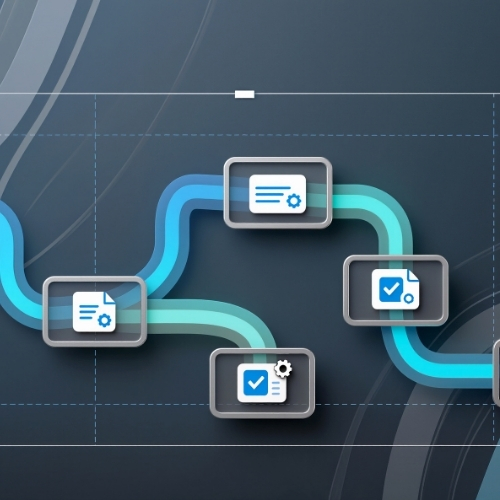
Firewalls or fixed network boundaries no longer define Enterprise security. As organisations accelerate cloud adoption and support hybrid work models, identity has emerged as the primary control layer. Zero Trust architecture builds on this shift by placing continuous verification at the centre of every access decision.
“In a perimeterless world, trust is no longer granted. It is continuously earned.”
The collapse of the traditional perimeter
For many years, enterprise cybersecurity strategies were built around a clearly defined perimeter. Organisations invested heavily in firewalls, intrusion detection systems, and virtual private networks to secure internal networks from external threats. Once a user gained access to the internal environment, they were typically granted a high level of implicit trust.
However, this model has become increasingly ineffective. The widespread adoption of cloud computing, SaaS platforms, and remote work has fundamentally changed how enterprises operate. Applications and data are no longer confined to a centralised data centre. Employees, partners, and third-party vendors now access systems from multiple locations, using a wide range of devices.
This shift has effectively dissolved the traditional network boundary. As a result, attackers no longer need to breach a perimeter to gain access. Instead, they target identities through phishing, credential theft, and social engineering attacks.
In this environment, the concept of “inside” and “outside” the network is no longer meaningful. Security must therefore be redefined around identity rather than location. Organisations are increasingly adopting identity-centric security models that verify every user, device, and session before granting access.
Understanding digital identity in modern enterprises
In a modern enterprise environment, digital identity extends far beyond basic login credentials. It represents a comprehensive and dynamic profile of a user, device, or system, built from multiple layers of data.
Digital identity includes not only authentication details such as usernames and passwords, but also contextual and behavioural attributes. These may include device health, geographic location, access history, usage patterns, and real-time risk indicators.

This evolution reflects a broader shift toward context-aware and risk-based security. Identity is no longer treated as a static attribute that is verified once at login. Instead, it is continuously evaluated throughout the user’s interaction with enterprise systems.
Leading identity platforms such as Okta and Microsoft have played a significant role in advancing this approach. These platforms integrate identity management with analytics, automation, and security intelligence, enabling organisations to make informed access decisions in real time.
For enterprise IT leaders, this means that identity has become a foundational element of cybersecurity strategy. It is no longer limited to user management, but serves as a critical control point for access governance and risk mitigation.
What Zero Trust really means
Zero Trust is best understood as a strategic framework rather than a specific technology or product. It is based on the principle that no user, device, or system should be trusted by default, whether it operates inside or outside the network.
This concept has been formally defined by the National Institute of Standards and Technology, which outlines Zero Trust as an approach that requires continuous verification of all access requests.
At its core, Zero Trust is guided by three key principles:
- All access requests must be explicitly authenticated and authorised
- Access privileges should be limited to the minimum necessary level
- Trust must be continuously validated based on real-time context
One of the defining characteristics of Zero Trust is continuous authentication. Unlike traditional models, where trust is established at login, Zero Trust requires ongoing verification throughout the user session. If risk signals change, access can be adjusted or revoked immediately.
This approach significantly reduces the risk of lateral movement within enterprise environments, which is a common tactic used in advanced cyberattacks.
Why Identity is the core of Zero Trust
Identity serves as the central decision-making layer within a Zero Trust architecture. Every access request is evaluated based on identity-related signals, making identity the primary factor in determining whether access should be granted.
When a user attempts to access a resource, the system assesses multiple variables. These include the user’s identity, the device being used, the location of the request, and the sensitivity of the resource being accessed. These factors are analysed together to determine the level of risk associated with the request.
Adaptive authentication enables organisations to respond dynamically to these risk levels. For example, a login attempt from a known device in a familiar location may proceed with minimal friction, while a request from an unknown device or location may trigger additional verification steps.
Session monitoring further strengthens this model by continuously analysing user behaviour after access has been granted. Any deviation from expected patterns can prompt security controls such as step-up authentication or session termination.
This continuous evaluation ensures that trust is not assumed at any point. Instead, it is established and maintained through ongoing verification.
Technologies driving identity-led security
The implementation of Zero Trust architecture depends on a set of integrated technologies that work together to enable identity-based access control across enterprise environments. At the core of this framework is Identity and Access Management (IAM), which provides centralised control over user identities, authentication processes, authorisation policies, and the full identity lifecycle. This is reinforced by Multi-Factor Authentication (MFA), which requires users to verify their identity through multiple factors, significantly reducing the risk of unauthorised access even in cases of compromised credentials.
In parallel, Privileged Access Management (PAM) secures high-risk accounts with elevated permissions, ensuring that access to critical systems and sensitive data is tightly controlled and monitored. Complementing these controls, Zero Trust Network Access (ZTNA) replaces traditional VPN-based models by granting secure, identity-driven access to specific applications rather than exposing the broader network. Organisations are increasingly adopting solutions from providers such as Zscaler and Cloudflare to implement ZTNA and strengthen their overall Zero Trust posture.
Together, these technologies form a cohesive and scalable framework that enables continuous verification, enforces least-privilege access, and supports risk-based security decisions across the enterprise.
Business impact and security outcomes
The adoption of identity-led Zero Trust architecture delivers significant benefits for enterprise organisations.
One of the most important outcomes is a reduction in breach risk. By limiting access to only what is necessary and continuously verifying user activity, organisations can significantly reduce their attack surface.
Zero Trust also supports regulatory compliance by providing detailed visibility into access events. This enables organisations to demonstrate accountability and meet audit requirements more effectively.
In addition, enhanced visibility into user behaviour allows security teams to detect and respond to threats more quickly. This improves overall incident response capabilities and reduces potential damage.
Importantly, modern identity solutions are designed to balance security with user experience. Adaptive authentication minimises friction for low-risk users while maintaining strong protection in high-risk scenarios.
The challenges enterprises cannot ignore
While the benefits of Zero Trust are clear, implementation presents several challenges that organisations must address.
Legacy systems often lack the flexibility required to support identity-centric security models. Integrating these systems with modern identity platforms can be complex and resource-intensive.
Identity sprawl is another growing concern. As organisations adopt multiple cloud services and applications, managing identities across different environments becomes increasingly difficult. This can lead to inconsistencies and gaps in security.
Integration complexity further complicates implementation. Achieving a seamless Zero Trust architecture requires coordination between multiple technologies and platforms.
Finally, user experience must be carefully managed. Security measures that introduce excessive friction can impact productivity and user satisfaction.
To address these challenges, many organisations adopt a phased approach, beginning with identity modernisation and gradually expanding their Zero Trust capabilities.
The Road Ahead: Identity as a strategic asset
As enterprises continue to evolve, digital identity is becoming a strategic asset rather than a purely technical function. Artificial intelligence is playing an increasingly important role in identity analytics. Advanced algorithms can analyse user behaviour in real time, identifying potential threats with greater accuracy.
Passwordless authentication is also gaining momentum, offering a more secure and user-friendly alternative to traditional credentials. Technologies such as biometrics and hardware-based authentication are leading this shift.

Decentralised identity models are emerging as a way to give users greater control over their identity data while reducing reliance on centralised systems.
For enterprise leaders, these developments highlight the growing importance of identity in shaping security strategy. Identity is no longer just a component of IT infrastructure. It is a critical enabler of secure digital transformation.
“Zero Trust is not a product. It is a continuous process built on identity, context, and control.” This perspective is widely supported by industry frameworks and Forrester research.
Rethinking enterprise security
Security leaders are no longer focused solely on protecting infrastructure. Their responsibility now extends to safeguarding identities, interactions, and the trust that underpins digital operations. In a Zero Trust environment, the key question is no longer whether a user is داخل the network, but whether they should be trusted at any given moment.
This shift represents a fundamental change in how enterprises approach security, and it will continue to shape the future of cybersecurity strategy.