
The Year of AI:
Why AI and Automation Are Marketing’s Biggest Power Plays

Marketing in 2025 feels different, not because the buzz around AI and automation is louder, but because it can’t be ignored. Hence, as marketing leaders draw up budgets, map out team workflows, and define performance metrics, many are realising: AI + automation isn’t just for saving time, but it’s for unlocking growth that legacy methods cannot deliver.
The New Budget Reality
The reality is that budgets are tight, and expectations aren’t.
For instance, studies show that while many companies are maintaining marketing budgets close to their historical norms, often around 7-8% of revenue, the pressure to deliver more from those dollars is intensifying. (Note: for some firms, budget growth is flat.)
Hence, executives are demanding greater performance, faster returns, and more evidence of impact.
In practice, this shifts how marketers justify success. Vanity metrics like impressions or clicks aren’t enough anymore, but leaders want to see a clear connection between campaign activity and revenue.
That’s changing how campaigns are designed and measured from the start.
Therefore, in that environment, every inefficiency, every redundant process, every decision that requires manual input becomes an opportunity cost. Teams that lean heavily on labour-intensive workflows are seeing their competitors automate, iterate faster, optimise in real time, and therefore capture more of the market’s attention and buyer demand.
Hence the rush towards AI and automation is not just about doing tasks faster, but it’s about closing the efficiency gap that threatens margins and market position.

AI as a Growth Lever, Not Just a Cost Saver
Importantly, leaders aren’t investing in AI just to reduce costs, but they’re investing because they expect growth.
From experience, this is the part many teams underestimate. For instance, they adopt AI tools to save time on execution, but forget that the real value comes from what you do with that saved time. Hence, if it isn’t reinvested into strategy, testing, or creativity, efficiency gains don’t actually translate into growth.
For example, research on agentic AI identifies these systems as becoming a competitive frontier. Agentic AI doesn’t just assist; it plans, decides, and acts. It orchestrates complex workflows with less human oversight. Early adopters are treating such tools not as luxury add-ons but as strategic levers for sharpening differentiation and delivering buyer value.
Moreover, data supports this this, as 65% of marketing leaders planning increased AI/automation investment believe these tools will free up time from manual tasks. Nearly 79% agree that AI and automation help reduce routine work, and about 73% say it helps them focus on more strategic, high-impact work roles.
Hence, when you remove friction and redundancy, you can redirect resources towards growth: better content, smarter campaigns, personalisation, experimentation.
Growth here means accelerating the pipeline, improving conversion rates, and improving lead quality, which are outcomes that move the top line.
Therefore, that’s why AI is becoming less optional and more central to marketing strategy.
How Automation Rewires Marketing Operations
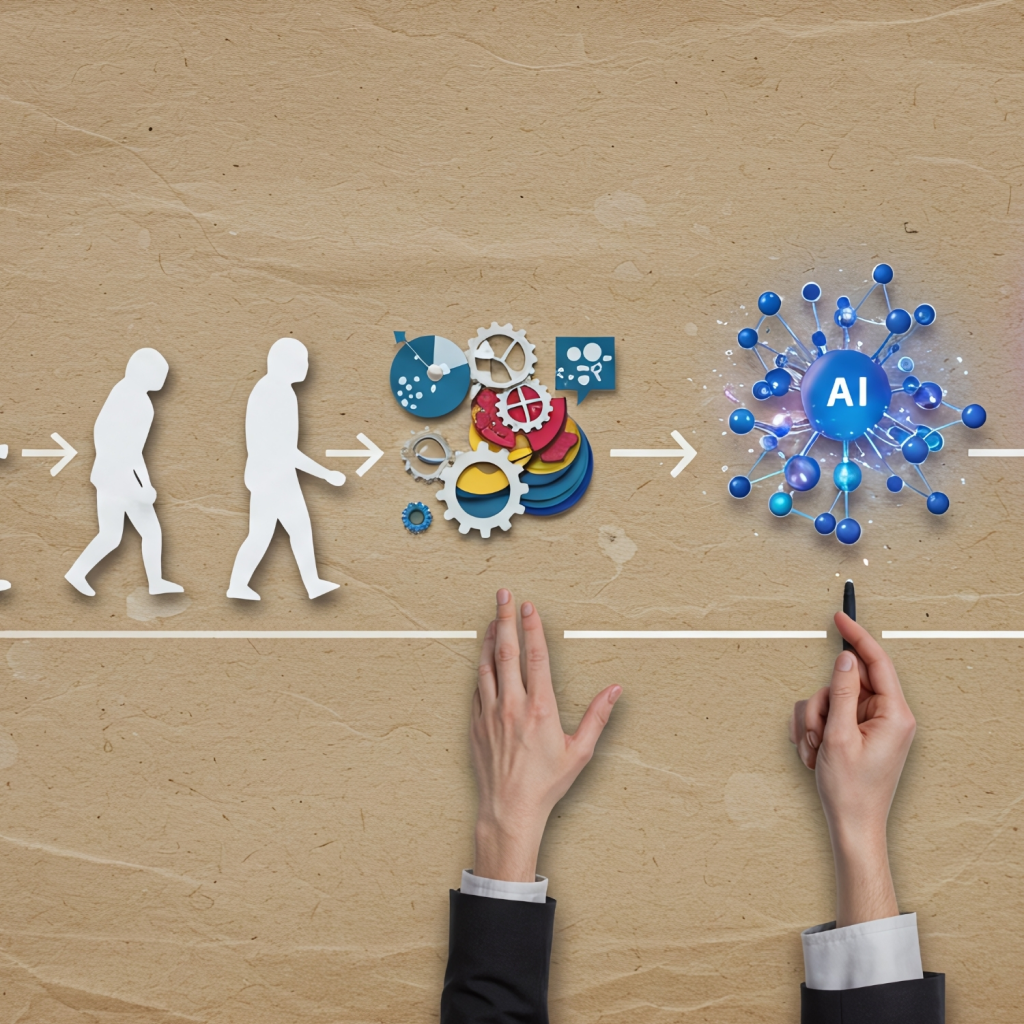
Automation in marketing once meant scheduled emails, drip campaigns, and rule-based workflows. Now it’s evolving. Modern automation, paired with AI, is re-architecting operations end to end.
From a personal perspective, the biggest change isn’t just workflow efficiency , but culture. Once automation handles repetitive tasks, marketers shift from being “doers” to interpreters and strategists.
Yes, that transition can feel uncomfortable, but it also creates space for creativity and more customer-centric problem-solving.
Recent research reveals that many marketing teams are already using automation built into existing tools to embed AI capacity, such as in content creation, personalisation, research, and campaign orchestration.
For instance, features like AI-enabled data cleansing, dynamic content flows, predictive lead scoring, and “agents” embedded in tools are removing manual handoffs and accelerating decision cycles.
Moreover, studies flags “agentic AI” as an emerging technology that will transform business processes. Agentic AI can take pieces of work formerly handled by humans and execute them, such as selecting, ordering, automating steps, and triggering actions.
In many cases, traditional marketing ops teams are being rethought, with fewer gatekeepers, more real-time feedback loops, and more autonomy for AI-augmented workflows.
Hence, the result is that repetitive tasks get automated, decision latency drops, and more time is available for strategic thinking, creativity, and optimisation.
Strategic Benefits for C-Suites
For CMOs, VPs, CROs, and other senior leaders, the move towards more AI and automation is attractive for several high-leverage reasons.
- First, revenue acceleration.
When marketing workflows are automated and AI-enabled, pipeline growth often follows. Moreover, data reports that many teams see improvements in lead quality when they apply automation and AI tools, which leads to more qualified leads entering the funnel. This shift matters because high lead volume without quality doesn’t scale revenue.
- Second, productivity gains.
Research suggests that roughly 79% of marketers said AI and automation reduce the time spent on manual tasks, and 73% said they free them to focus on higher-impact work.
That kind of shift adds up in the form of fewer hours spent waiting, coordinating, and repetitive execution, and more time spent iterating, strategising, being creative, and leading.
- Third, competitive differentiation.
Data on agentic AI highlights the fact that early adopters will gain a substantial advantage. Therefore, companies that rearchitect their core processes, embed AI into tools, and adjust roles will outperform those who lag.
Moreover, the “automation-led” teams will move faster on testing, iterate campaigns, and personalise content more dynamically and all of which matter in crowded B2B and SaaS markets.
- Fourth, improved measurement and decision confidence.
AI tools give more data earlier in the form of predictive analytics, performance forecasts, and leading indicators.
For instance, marketing leaders in a survey express that automation helps in making data-driven decisions.
Hence, these earlier signals allow for course correction before big budget commitments are sunk.
However, if I were advising executives, I’d stress this: technology alone doesn’t guarantee impact. Teams need training, cultural buy-in, and incentives aligned to use AI properly. Otherwise, tools risk becoming underused or adding complexity instead of clarity.
In short, investment in AI and automation isn’t just about doing work faster, but it’s about doing the right work earlier, improving outcomes, and aligning marketing more closely with revenue and business KPIs.

Risks & Barriers to Real Adoption
That said, betting big on AI + automation isn’t without real risk. For leaders pushing aggressively, certain barriers must be anticipated and addressed.
- One major risk is measurement uncertainty.
While many believe in AI’s promise, fewer feel confident in measuring its impact.
For example, data shows that around 47% of marketers strongly or somewhat agree they understand how to measure AI’s impact, which means that over half feel less clear about when or how AI delivers ROI.
Hence, without rigorous metrics, projects may drift, waste resources, or be judged failures.
- Another barrier: data quality and systems integration.
AI and automation tools are only as good as the data they consume.
For instance, HubSpot’s new features around Data Hub and AI-enabled data cleanup show how the company is prioritising this foundational work.
However, many organisations lag on this front. Silos, inconsistent data, and manual reconciliation all work against realising the benefits of automation.
- On the other hand, there is also “agentic AI maturity risk.”
Research points out that while agentic AI holds promise, it is still early, and organisations need processes, governance, and evaluation in place. Hence, mistakes in automating without clear oversight can lead to undesirable outcomes.
- Finally, there is the cost versus hype mismatch.
An article shows that over 40% of agentic AI projects are expected to be scrapped by the end of 2027, largely due to rising costs, unclear business value, or overpromising capabilities.
One barrier I’ve observed is mindset. For instance, if teams fear automation as a job threat rather than a tool that elevates their work, adoption slows down. Hence, leaders need transparency, reskilling, and small pilots to build confidence.
Why 2025 Is the Inflexion Point
So why is 2025 the year this shift feels irreversible?
Because the stars have aligned: leadership urgency, budget constraints, buyer expectations, and technology maturity.
A survey showing 65% of marketing leaders planning to increase investment in AI and automation is itself proof that this is no longer fringe.
Hence, many organisations are starting to embed AI/automation into their core tech stack rather than treating them as add-ons.
Furthermore, research identifies “agentic AI” as an emerging technology for 2025 , which further confirms that what was once experimental is now gaining serious enterprise attention. With that comes more investment, more pilots, more scrutiny.
Additionally, against the backdrop of flat or modestly growing marketing budgets, the only way many firms can hit growth targets is by squeezing efficiency, accelerating cycles, and making decisions earlier. Therefore, AI and automation are central to each of those levers.
Finally, buyer expectations are evolving. Buyers expect personalisation, speed, consistency, and a seamless experience.
Therefore, marketing that can’t scale those attributes risks being pushed aside.
The Future of Marketing Roles & Workflows
The shift to more investment in AI and automation also means a shift in what marketing work looks like, who does it, and how workflows are shaped.
For instance, human roles will evolve. Marketers will spend less time on execution and more on oversight, strategy, storytelling, creative leadership, and customer understanding. Moreover, process and operations people will lean into system design, data governance, AI-tool oversight, and orchestration of human + machine collaboration.
To back this up, research into agentic AI stresses not only the existence of tools but the need for governance, guardrails, and robust process design. Hence, systems that let AI agents operate with some autonomy must also embed transparency, feedback loops, and risk controls.
Furthermore, tools will continue to be embedded, such as native AI in content platforms, CRMs, analytics, internal agents for research, personalisation, predictive modelling, automation of journeys, scoring, and campaign orchestration.
Hence, marketing operations will increasingly include experimentation labs, measurement frameworks that capture leading signals, and budgeting cycles that explicitly allocate for AI/automation maturity.
Finally, workflows will shift from linear campaign funnels to more continuous, adaptive loops: build, test, optimise, personalise. Response cycles will compress. Systems will need to interoperate. Teams will need to be more cross-functional by melding strategy, creative, analytics, operations, and technology.
To me, this is the most exciting part: the skills that matter are evolving. Someone who once spent hours building reports might now spend that time advising sales on strategy. That makes adaptability, storytelling, and customer empathy more valuable than ever, because tools will keep changing, but those unique human capabilities can’t be automated.

So What for 2025?
Looking across the research, one theme stands out to me: the challenge isn’t just access to AI tools, but how teams use them.
- Efficiency gains only matter if the saved time is reinvested in growth-driving activities.
- Adoption only succeeds if leaders manage the cultural shift with reskilling and transparency.
- Competitive advantage comes not from the tool itself, but from how seamlessly it’s integrated into workflows, customer experiences, and strategy.
Therefore, in my view, this is the year where marketers prove whether they can treat AI not as a mere cost saver, but as a strategic partner.
Hence, the ones who succeed will move faster, experiment more, and create customer experiences that feel personal and human, even when powered by machines.
Conclusion & Executive Call to Action
In 2025, marketing leaders can’t afford to sit on the sidelines. The wave is real: more investment, more capability, more urgency. AI and automation are foundational to modern marketing success.
Here are three imperatives for executives:
- Invest in the data foundation now. Clean, unified, governed data is essential. Without it, AI and automation risks amplify mistakes instead of enabling growth.
- Pilot with purpose and metrics. Choose high-impact workflows (lead qualification, personalisation, predictive scoring) for initial automation. Define ROI upfront; measure leading indicators as well as outcomes.
- Align roles, workflows, and incentives around human + AI collaboration. Reskilling, oversight, change management, and transparent governance must be baked in.
On a concluding note, early movers will set the pace. Those who wait may find their budgets sufficient, but their performance lagging.
Therefore, in marketing in 2025, doing AI well may be the difference between leading the market and defending one.