Network

Network, Uncategorized

Gigamon extends deep observability pipeline to address emerging threats in quantum computing

Gigamon extends deep observability pipeline to address emerging threats in quantum computing Gigamon, a leader in deep observability, announced the availability of GigaVUE 6.12, introducing new support for post-quantum cryptography (PQC), further expanding the capabilities of the Gigamon Deep Observability Pipeline. This release equips organizations with an immediate defensive strategy against emerging cryptographic threats hidden in encrypted traffic, including both classic and post-quantum ciphers, while accelerating the transition to quantum-safe encryption standards. As quantum computing advances, current public key encryption methods will soon be at risk. Leading analysts forecast traditional cryptography will be unsafe as early as 2030. According to the Gigamon Hybrid Cloud Security Survey of more than 1,000 Security and IT leaders, 73 percent are currently planning to implement PQC in their networks, as they prepare their hybrid cloud infrastructure and defense strategies for quantum computing. “Quantum readiness isn’t a future concern. It’s a critical imperative for all security teams today,” said Chaim Mazal, chief AI and Security officer at Gigamon. “With the advances we’ve made, I’m optimistic about the safeguards we’re building to future-proof hybrid cloud infrastructure and its data. The Gigamon Deep Observability Pipeline delivers the encryption visibility and network intelligence organizations require today, while building a resilient foundation for tomorrow’s quantum-safe future.” Deep Observability Pipeline: Building the TLS 1.3 Foundation for PQC Readiness As organizations prepare for the transition from public key algorithms to PQC, Security and IT teams first require an understanding of where cryptography is used, how data flows between systems, and which assets remain exposed. That level of insight is only possible through deep observability, the correlation of network-derived telemetry—packets, flows, and metadata—with log data from security, cloud, and observability tools.  The Gigamon Deep Observability Pipeline delivers this level of intelligence by exposing weak cipher suites and non-compliant encryption methods that often remain hidden in encrypted flows. With Gigamon, organizations can build a cryptographic inventory, validate PQC implementations, and promote the secure and efficient operation of encryption, whether classical or quantum safe.  Today’s organizations are rapidly transitioning to TLS 1.3, one of the most widely adopted security protocols that uses encryption and currently the only protocol to support PQC. TLS 1.3 is natively supported by Gigamon, and depending on requirements, customers can choose to either decrypt traffic or select specific traffic for its Gigamon Precryption® technology. Precryption technology allows security teams to get plaintext visibility across encrypted traffic in virtual, cloud, and container environments without having to perform “break and inspect.”  Countering ‘Harvest Now, Decrypt Later’ Threats  Amid the industry’s transition to PQC, threat actors are adopting a “harvest now, decrypt later” strategy to exfiltrate unreadable data now with a plan to decrypt it once the technology is available.  According to Gartner, “The “harvest now, decrypt later” threat has made the transition to quantum-safe cryptography a global imperative. Because today’s public-key cryptography is fundamentally at risk, governments and regulatory bodies are pushing organizations to act now. This is not a strategic choice but a mandated requirement to ensure long-term data security.” Gigamon Application Metadata Intelligence (AMI), which is network-derived telemetry enriched with application-level context, delivers visibility into encrypted traffic and now also supports PQC, enabling organizations to easily identify, report, and eliminate insecure cryptographic practices. This ability to immediately identify threats and take action to prevent data exfiltration today paves the way for a secure, quantum-resistant hybrid cloud infrastructure. The new Gigamon PQC capabilities enable Security and IT teams to: About Gigamon  Gigamon® offers a deep observability pipeline that efficiently delivers network-derived telemetry to cloud, security, and observability tools. This helps eliminate security blind spots and reduce tool costs, enabling you to better secure and manage your hybrid cloud infrastructure. To learn more, please visit gigamon.com. (Adapted from press release)

Network, Uncategorized

Indonesia Arena GBK and Cisco usher in Indonesia’s first Wi-Fi 7 deployment

Indonesia Arena GBK and Cisco usher in Indonesia’s first Wi-Fi 7 deployment The Gelora Bung Karno Complex Management Center (PPKGBK) and Cisco, the worldwide leader in networking and security, announced a transformative collaboration to modernize the Indonesia Arena and set a new standard for smart stadiums in the region. The initiative, supported by the Indonesia Technology Alliance (ITA) and as part of Cisco’s Country Digital Acceleration (CDA) program, will position Indonesia Arena as the nation’s first sports and event venue powered by secure Wi-Fi 7 technology. The signing ceremony, attended by Her Excellency Meutya Viada Hafid, Minister of Communication and Digital Affairs (Komdigi), and Oliver Tuszik, EVP, Global Sales and Chief Sales Officer, Cisco, marks a pivotal step in advancing Indonesia’s digital infrastructure and enhancing visitor experiences. Redefining the Connected Venue The collaboration integrates advanced connectivity, data analytics, and security solutions, setting a new benchmark for what’s possible in smart venue environments. Visitors, athletes, and organizers will benefit from ultra-fast, high-capacity, secure wireless access, powering everything from live streaming to real-time digital engagement and seamless transactions. “We are proud to lead Indonesia’s digital transformation in sports and entertainment by making Indonesia Arena the first venue in the country with secure Wi-Fi 7,” said Rakhmadi A. Kusumo, President Director of PPKGBK. “This investment ensures we are ready to host world-class events and deliver extraordinary digital experiences to everyone who enters our doors.” Smart Stadium, Smarter Operations The smart venue will be powered by 320 Cisco Wireless access points, including some of the industry’s first enterprise-grade, Wi-Fi 7 high-density access points, designed specifically for large public venues. Leveraging integrated platforms like Cisco Spaces and Cisco Identity Services Engine (ISE), a comprehensive security policy management and control platform, PPKGBK will gain actionable insights into crowd movement, space utilization and operations, and provide patrons with secure and seamless internet access. This data-driven approach not only enhances fan engagement and safety but also operational efficiency and sustainability. This collaboration demonstrates the power of public-private partnerships in advancing technology and delivering benefits that extend well beyond smart stadiums, but also for other large venue and public spaces.Bee Kheng Tay The new command center, developed in collaboration with ITA, will further enable proactive network monitoring and rapid response, ensuring a secure and reliable environment. “We are delighted to be the technology partner for PPKGBK, to help them realize and advance their digital ambitions. Together with PPKGBK and ITA, we are helping to build a future-ready, digitally connected Indonesia,” said Bee Kheng Tay, President, Cisco ASEAN. “This collaboration demonstrates the power of public-private partnerships in advancing technology and delivering benefits that extend well beyond smart stadiums, but also for other large venue and public spaces.” Public-Private Partnership for a Digital Future Komdigi’s regulatory oversight ensures that this project meets the highest national and international standards, reinforcing the government’s commitment to technological advancement in Indonesia. The initiative is expected to be completed by the first half of 2026, establishing Indonesia Arena as a model for the next generation of connected, intelligent venues. About the Gelora Bung Karno (GBK) Complex Management Center GBK is the largest sports complex located in the heart of the Republic of Indonesia’s capital. Its vision is to become a modern, environmentally friendly, and world-class integrated sports complex. About Cisco Cisco (NASDAQ: CSCO) is the worldwide technology leader that is revolutionizing the way organizations connect and protect in the AI era. For more than 40 years, Cisco has securely connected the world. With its industry leading AI-powered solutions and services, Cisco enables its customers, partners and communities to unlock innovation, enhance productivity and strengthen digital resilience. With purpose at its core, Cisco remains committed to creating a more connected and inclusive future for all. Discover more on The Newsroom and follow us on X at @Cisco. (Adapted from press release)

Network

NTT DATA and Cisco Partner to Power Networking for the AI Era

New IDC Study Sponsored by NTT DATA and Cisco Guides Network Modernisation for AI Transformation NTT DATA, a global leader in digital business and technology services, and Cisco today unveiled a new co-sponsored IDC InfoBrief, Wired for Intelligence: A CIO Guide to Enterprise Networking for AI. The study shares strategic guidance for organizations seeking to accelerate transformation by modernizing their network infrastructure.   As organizations integrate AI into more applications, from manufacturing and healthcare to financial services, the demand for high-speed, low-latency, and secure networks is surging. Legacy infrastructure is no longer sufficient to support the scale and complexity of AI workloads. NTT DATA and Cisco are responding to this shift by helping clients evolve from outdated architectures to intelligent, adaptive infrastructure that can power AI-driven innovation. “As two market leaders, NTT DATA and Cisco are well positioned to help clients modernize their digital infrastructure foundations for the AI era. The network exists as a catalyst for growth and organizations can unlock powerful new capabilities and achieve AI-driven business transformation at scale,” said Dilip Kumar, Global Head, Technology Solutions, NTT DATA, Inc. The Critical Foundation Empowering AI-Driven Growth The study highlights that network modernization is at the heart of AI success. More than 78% of companies say that networking capabilities are either important or very important when selecting providers for GenAI infrastructure — underscoring the need for networks that can handle and secure ever-scaling AI workloads while running complex AI training, inference, and storage clusters with ease. At the same time, modernization also infuses AI into network operations through AI-driven configuration, anomaly detection, self-healing, and intelligent monitoring to accelerate issue resolution and elevate user experience. Already, industries like manufacturing, healthcare, and financial services are leveraging AI in networking to improve operational efficiency, ensure secure connectivity and reduce costs. “Network modernization is about more than replacing old hardware—it’s about allowing enterprises to lead in an AI-driven world,” said Brink Sanders, Senior Vice President of Global Networking Sales, Cisco. “Our partnership with NTT DATA equips clients with the technology and expertise needed to build secure and connected networks.” “Your network will make or break your AI transformation. Overcoming the challenges of legacy networking technologies is essential. This IDC InfoBrief gives organizations the steps to transform enterprise networking from a bottleneck into a business advantage,” said Chris Barnard, Vice President, European Telecoms and Infrastructure, IDC. NTT Data is Enabling Modernisation Through Intelligent Services NTT DATA’s comprehensive suite of intelligent services helps clients modernize their digital infrastructure and build secure networks. These services span the full lifecycle from advisory to sourcing, professional services, support and managed services to enable organizations to modernize and unlock the full potential of AI. With many companies undergoing hardware refresh cycles due to the emergence of AI, NTT DATA’s services are designed to meet this critical moment: Advisory: Strategic guidance to align network modernization with AI goals.  Strategic Technology Sourcing: Recommending and procuring the right technology to transform network to be AI-ready.  Professional Services: Architecting and deploying scalable, secure and high-performance networks.  Software-Defined Infrastructure Services: Driving business outcomes through adoption of automation and AI agents into infrastructure operations and license optimization. Adoption Services: Maximizing value from infrastructure investments through greater adoption of software, continuous improvement and change management. Managed Network Services: End-to-end network management to ensure seamless data flow from edge to cloud, minimizing latency and enhancing application responsiveness. NTT DATA recently launched AI-powered Software Defined Infrastructure (SDI) services for Cisco products to deliver intelligent automation and real-time insights to optimize infrastructure, reduce costs, and drive business outcomes.   About NTT Data NTT DATA is a $30+ billion trusted global innovator of business and technology services. We serve 75% of the Fortune Global 100 and are committed to helping clients innovate, optimize and transform for long-term success. As a Global Top Employer, we have experts in more than 50 countries and a robust partner ecosystem of established and startup companies. Our services include business and technology consulting, data and artificial intelligence, industry solutions, as well as the development, implementation and management of applications, infrastructure and connectivity. We are also one of the leading providers of digital and AI infrastructure in the world. NTT DATA is part of NTT Group, which invests over $3.6 billion each year in R&D to help organizations and society move confidently and sustainably into the digital future. Visit us at nttdata.com About Cisco Cisco (NASDAQ: CSCO) is the worldwide technology leader that is revolutionizing the way organizations connect and protect in the AI era. For more than 40 years, Cisco has securely connected the world. With its industry leading AI-powered solutions and services, Cisco enables its customers, partners and communities to unlock innovation, enhance productivity and strengthen digital resilience. With purpose at its core, Cisco remains committed to creating a more connected and inclusive future for all. Discover more on The Newsroom and follow us on X at @Cisco.   Cisco and the Cisco logo are trademarks or registered trademarks of Cisco and/or its affiliates in the U.S. and other countries. A listing of Cisco’s trademarks can be found at http://www.cisco.com/go/trademarks. Third-party trademarks mentioned are the property of their respective owners. The use of the word ‘partner’ does not imply a partnership relationship between Cisco and any other company.

Network

Gigamon survey: 91% of security leaders are recalibrating hybrid cloud risk during this AI era

Gigamon survey: 91% of security leaders are recalibrating hybrid cloud risk during this AI era Key findings from Gigamon’s survey highlight how hybrid cloud risk and security priorities have to be recalibrated during this AI era as organisations are challenged with ineffective and inefficient tools, fragmented environments and low visibility. Gigamon, a leader in deep observability, released its 2025 Hybrid Cloud Security Survey, revealing that hybrid cloud infrastructure is under mounting strain from the growing influence of artificial intelligence (AI). The annual study, now in its third year, surveyed over 1,000 global Security and IT leaders across Australia, France, Germany, Singapore, UK, and US. As cyberthreats increase in both scale and sophistication, breach rates have surged to 55 percent during the past year, representing a 17 percent year-on-year (YoY) rise, with AI-generated attacks emerging as a key driver of this growth. Security and IT teams are being pushed to a breaking point, with the economic cost of cybercrime now estimated to be $3 trillion worldwide according to the World Economic Forum. As AI-enabled adversaries grow more agile, organizations are challenged with ineffective and inefficient tools, fragmented cloud environments, and limited intelligence. Key Findings Highlight How AI is Reshaping Hybrid Cloud Security Priorities   AI’s role in escalating network complexity and accelerating risk is evident. The study reveals that 46 percent of Security and IT leaders say managing AI-generated threats is now their top security priority. One in three organizations report that network data volumes have more than doubled in the past two years due to AI workloads, while nearly half of all respondents (47 percent) are seeing a rise in attacks targeting their organization’s large language model (LLM) deployments. More than half (58 percent) say they’ve seen a surge in AI-powered ransomware—up from 41 percent in 2024 underscoring how adversaries are exploiting AI to outpace and outflank existing defenses. Compromises highlight continued trade-offs in foundational areas of hybrid cloud security. 96 percent of Singaporean respondents concede that they need to make compromises in securing and managing their hybrid cloud infrastructure. The key challenges that create these compromises include the lack of clean, high-quality data to support secure AI workload deployment (46 percent) and lack of comprehensive insight and visibility across their environments, including lateral movement in East-West traffic (47 percent). Public cloud risks prompt industry recalibration. Once considered an acceptable risk in the rush to scale post-COVID operations, the public cloud is now coming under increasingly intense scrutiny. Many organizations are rethinking their cloud strategies in the face of their growing exposure, with 71 percent  of Security and IT leaders in Singapore now viewing the public cloud as a greater risk than any other environment. As a result, 76 percent of Singaporean respondents report their organization is actively considering repatriating data from public to private cloud due to security concerns and 54 percent are reluctant to use AI in public cloud environments, citing fears around intellectual property protection. Visibility is top of mind for Security leaders. As cyberattacks become more sophisticated, the limitations of existing security tools are coming sharply into focus. Organizations are shifting their priorities toward gaining complete visibility into their environments, a capability now seen as crucial for effective threat detection and response. More than half (55 percent) of respondents lack confidence in their current tools’ ability to detect breaches, citing limited visibility as the core issue. As a result, 64 percent say their number one focus for the next 12 months is achieving real-time threat monitoring and delivered through having complete visibility into all data in motion. “Security teams are struggling to keep pace with the speed of AI adoption and the growing complexity of and vulnerability of public cloud environments,” said David Land, vice president, APAC at Gigamon. “Deep observability addresses this challenge by combining MELT data with network-derived telemetry such as packets, flows, and metadata, delivering increased visibility and a more informed view of risk. It enables teams to close visibility gaps, regain control, and act proactively with increased confidence. With 93 percent of Security and IT leaders in Singapore agreeing it is critical to securing AI deployments, deep observability is fast becoming a strategic imperative.” Deep Observability Becomes the New Standard With AI driving unprecedented traffic volumes, risk, and complexity, nearly nine in 10 (89 percent) Security and IT leaders cite deep observability as fundamental to securing and managing hybrid cloud infrastructure. Executive leadership is taking notice, as boards increasingly prioritize complete visibility into all data in motion, with 88 percent of Singaporean respondents confirming that deep observability is now being discussed at the board level to better protect hybrid cloud environments. About the survey The 2025 Hybrid Cloud Security Survey was commissioned by Gigamon and fielded in collaboration with Vitreous World. The data is based on findings of an online survey of 1,021 global respondents Feb. 21- Mar. 7, 2025. About Gigamon Gigamon® offers a deep observability pipeline that efficiently delivers network-derived telemetry to cloud, security, and observability tools. This helps eliminate security blind spots and reduce tool costs, enabling you to better secure and manage your hybrid cloud infrastructure. Gigamon serves more than 4,000 customers worldwide, including over 80 percent of Fortune 100 enterprises, 9 of the 10 largest mobile network providers, and hundreds of governments and educational organisations worldwide. To learn more, please visit gigamon.com.

Network

Ant International launches tokenised solutions for real-time treasury management with HSBC

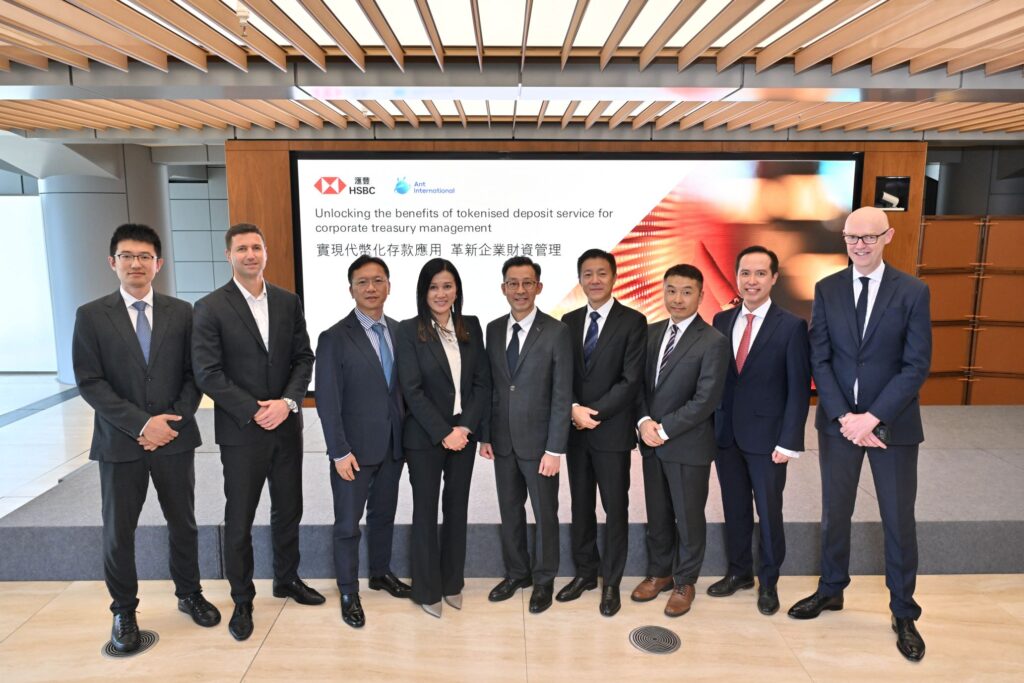
Ant International launches tokenised solutions for real-time treasury management with HSBC Lewis Sun, Global Head of Domestic and Emerging Payments, Global Payments Solutions, HSBC (fourth from right), and Kelvin Li, General Manager of Platform Tech, Ant International (third from left), together with other senior executives.     The Tokenised Deposit Service is also the first bank-led, blockchain-based settlement service in Hong Kong. The Whale platform is a next-generation treasury management solution that utilises blockchain technology. Ant International announced its collaboration with HSBC on the bank’s new Tokenised Deposit Service in Hong Kong. The service will support treasury management with real-time, always-on HKD and USD payments between corporate wallets held by a corporate client at HSBC Hong Kong. The launch comes after a successful pilot test between HSBC and Ant International on Ant’s Whale platform, which has been rolling out blockchain-based payments and tokenised deposits solutions with various bank partners. Following the pilot test, HSBC adapted the learnings from the joint innovation into its Tokenised Deposit Service, with Ant International as the pioneer client. As the first client to utilise the Tokenised Deposit Service, Ant International has successfully completed an instant intra-group fund transfer via the service. It initiated the transaction via its internal global treasury management platform, the Whale platform, digitising its USD deposits with HSBC into digital tokens on the bank’s secure distributed ledger. One of the core products developed by the Platform Tech team under Ant International’s Embedded Finance business, the Whale platform is a next-generation treasury management solution that utilises blockchain technology, including advanced encryption and AI, to improve the efficiency and transparency of funds transfer between Ant International’s intragroup entities for real-time global treasury management. In 2024, more than a third of Ant International’s transactions were processed on-chain via the Whale platform. The Whale platform currently supports multiple tokenised assets from leading banks and institutions around the world, enabling interoperability across diverse blockchain networks. By leveraging leading DLT technologies such as homomorphic encryption and zero-knowledge proofs, the Whale platform encrypts transaction information and enables multi-party verification in an encrypted state, ensuring secure, confidential, and seamless cross-chain transactions.  Ant International’s collaboration with HSBC on tokenised deposits expands a longstanding partnership since 2020. In October 2024, Ant International and HSBC also completed a successful HKD-denominated cross-bank experiment under the Hong Kong Monetary Authority’s Ensemble Sandbox. “We are very excited to work with an industry leader like HSBC, who shares the belief that tokenisation is the key to bridging the stability of traditional banking with the efficiency of blockchain, to enable real-time treasury management,” said Kelvin Li, General Manager of Platform Tech at Ant International. “As a tech connector in the fast-evolving financial services industry, our banking partnerships are expanding from tokenisation to AI-driven global FX and liquidity initiatives. We look forward to working with more public and private-sector partners to unlock more transparent, accessible and efficient treasury management solutions for businesses worldwide.” About Ant International With headquarters in Singapore and main operations across Asia, Europe, the Middle East and Latin America, Ant International is a leading global digital payment, digitisation and financial technology provider. Through collaboration across the private and public sectors, our unified techfin platform supports financial institutions and merchants of all sizes to achieve inclusive growth through a comprehensive range of cutting-edge digital payment and financial services solutions. To learn more, please visit https://www.ant-intl.com/ (Adapted from a press release).

AI, Network

F5 2025 Report reveals talk becomes action as AI gets to work

F5 2025 Report reveals talk becomes action as AI gets to work F5 Report highlights AI-driven transformation Amid operational complexity. 96% of surveyed IT decision-makers have deployed AI models, up from a quarter in  2023    IT leaders are increasingly trusting AI with business critical tasks from traffic management to cost optimization, according to the industry’s  most comprehensive report on application strategy. F5’s 2025 State of Application Strategy Report, which surveys global IT decision  makers, found that 96% of organizations are now deploying AI models, up from a  quarter in 2023.  There is also a growing willingness to elevate AI to the heart of business operations. Almost three-quarters of respondents (72%) said they want to use AI to optimize app  performance, whereas 59% support the use of AI for both cost-optimization and to  inject security rules, automatically mitigating zero-day vulnerabilities. There is also a growing willingness to elevate AI to the heart of business operations. Almost three-quarters of respondents (72%) said they want to use AI to optimize app  performance, whereas 59% support the use of AI for both cost-optimization and to  inject security rules, automatically mitigating zero-day vulnerabilities.  Today, half of organizations are using AI gateways to connect applications to AI tools,  and another 40% expect to be doing so in the next 12 months. Most are using this  technology to protect and manage AI models (62%), provide a central point of control  (55%), and to protect their company from sensitive data leaks (55%).  “This year’s SOAS Report shows that IT decision makers are becoming confident about  embedding AI into ops,” said Lori MacVittie, F5 Distinguished Engineer. “We are fast  moving to a point where AI will be trusted to operate autonomously at the heart of an  organization, generating and deploying code that helps to cut costs, boost efficiency,  and mitigate security problems. That is what we mean when we talk about AIOps, and it  is now becoming a reality.” Operational readiness and API challenges remain    Despite growing AI confidence, the SOAS Report highlights several enduring challenges. For organizations currently deploying AI models, the number one concern is AI model  security. And, while AI tools are more autonomous than ever, operational readiness gaps still  exist. 60% of organizations feel bogged down by manual workflows, and 54% claim skill  shortages are barriers to AI development.  Furthermore, almost half (48%) identified the cost of building and operating AI  workloads as a problem, up from 42% last year.   A greater proportion of organizations also said that they have not established a scalable  data practice (39% vs. 33% in 2024) and that they do not trust AI outputs due to  potential bias or hallucinations (34% vs. 27%). However, fewer complained about the  quality of their data (48%, down from 56% last year).   APIs were another concern. 58% reported they have become a pain point, and some  organizations spend as much as half of their time managing complex configurations  involving numerous APIs and languages. Working with vendor APIs (31%), custom  scripting (29%), and integrating with ticketing and management systems (23%) were  flagged as the most time-consuming automation-related tasks.  “Organizations need to focus on the simplification and standardization of operations,  including streamlining APIs, technologies, and tasks,” said MacVittie. “They should also  recognize that AI systems are themselves well-suited to handle complexity  autonomously by generating and deploying policies or solving workflow issues.  Operational simplicity is not just something on which AI is going to rely, but which it will  itself help to deliver.” Hybrid app deployments prevail   Allied to soaring AI appetites is a greater reliance on hybrid cloud architectures.   According to the SOAS Report, 94% of organizations are deploying applications across  multiple environments—including public clouds, private clouds, on-premises data  centers, edge computing, and colocation facilities—to meet varied scalability, cost,  and compliance requirements.  Consequently, most decision makers see hybrid environments as critical to their  operational flexibility. 91% cited adaptability to fluctuating business needs as the top  benefit of adopting multiple clouds, followed by improved app resiliency (68%) and cost efficiencies (59%).   A hybrid approach is also reflected in deployment strategies for AI workloads, with 51%  planning to use models across both cloud and on-premises environments for the  foreseeable future. Significantly, 79% of organizations recently repatriated at least one application from the  public cloud back to an on-premises or colocation environment, citing cost control,  security concerns, and predictability. This marks a dramatic rise from 13% just four  years ago, further underscoring the importance of preserving flexibility beyond public  cloud reliance. Still, the hybrid model can prove a headache for some. Inconsistent delivery policies  (reported by 53% of respondents) and fragmented security strategies (47%) are all top  of mind in this respect.  “While spreading applications across different environments and cloud providers can  bring challenges, the benefits of being cloud-agnostic are too great to ignore. It has  never been clearer that the hybrid approach to app deployment is here to stay,” said  Cindy Borovick, Director of Market and Competitive Intelligence, F5. APCJ AI adoption and challenges – key highlights:  AI Gateways on the Rise: Nearly half of APCJ organizations (49%) are already  using AI gateways to connect applications to AI tools, with another 46% planning  to do so in the next 12 months.  Top Use Cases for AI Gateways: Among those leveraging AI gateways, the most  common applications include protecting and managing AI models (66%),  preventing sensitive data leaks (61%), and observing AI traffic and application  demand (61%).  Data and Trust Challenges: Over half (53%) struggle with immature data  quality, and 45% are deterred by the high costs of building and running AI  workloads.  Hybrid Complexity: The hybrid model of AI deployment introduces hurdles, with  79% citing inconsistent security policies, 59% highlighting delivery  inconsistencies, and 16% dealing with operational difficulties.  Toward a programmable, AI-driven future   Looking ahead, the SOAS Report suggests that organizations aiming to unlock AI’s full  potential should focus on creating programmable IT environments that standardize and  automate app delivery and security policies.  By 2026, AI is expected to move from isolated tasks

Scroll to Top