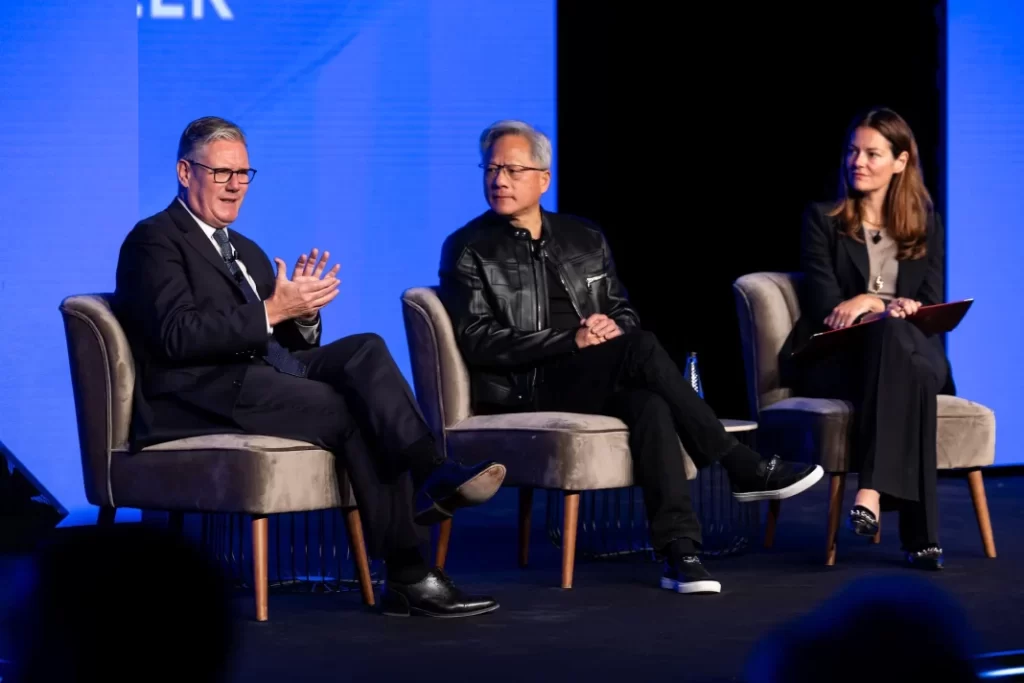
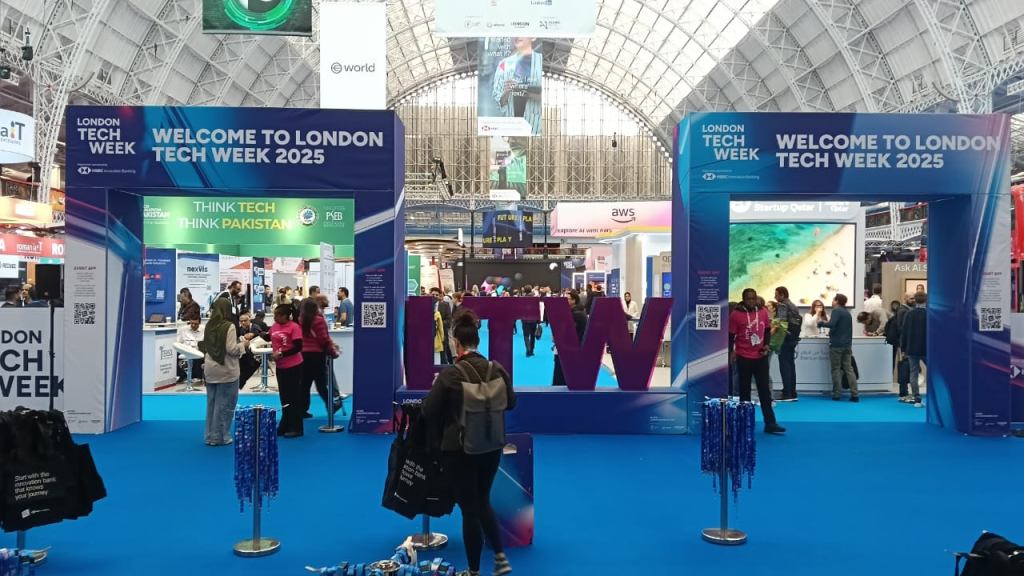
The next generation of AI, thanks to quantum technology, is going to be far more impactful, reliable, accountable and valuable to every single one of us, according to a quantum computing expert. London Tech Week and its headliner event, The AI Summit London, was chock full of innovative sights and sounds and to this journalist, it was the ones around AI and quantum computing that really stole the show. Attending a technology conference and exhibition touted to be the most prominent in the United Kingdom, was a treat, even more so because of the iconic, historical and yet modern locations each were held at. Here are the technologies and trends which Enterprise IT News zoomed into during these two events: Quantum on the rise Ilyas Khan, the co-founder of quantum unicorn, Quantinuum, wanted to emphasise the emerging importance of quantum computing and its potential to revolutionise various fields. Ilyas described, “A very small number of people would have given any attention to it, and of course, here we are in the middle of 2025 and it’s on the verge of becoming what I consider to be an everyday topic, both in terms of government policy, in terms of the financial markets, but most important in terms of your day-to-day lives. “ The burning question remains, “What is it that quantum computing is going to do that is making it so interesting for such a wide variety of people all over the world?” Ilyas also thought that the industry is, if not a few years away then a year or two away from the conversation about AI incorporating quantum. “There is not a country anywhere that does not have a quantum programme, a set of initiatives that in many instances stretch back many, many years.” Ilyas also opined that the hype cycle for quantum computing hasn’t even started yet, and suggests that more investments are likely to come in the near future. Hardware, compute power, and tipping point When we talk about AI, we are talking about our ability to utilise underlying hardware. So, if the GPU revolution hadn’t happened, we wouldn’t be talking about ChatGPT or Anthropic or Cohere, today. This aligns with what quantum hardware like super computers are anticipated to enable and the next generation of AI thanks to quantum technology, is going to be far more impactful, reliable, accountable and valuable to every single one of us, Ilyas believed. Could the quantum tipping point have happened this year? Ilyas thinks so with the commitment of large organisations and countries to large deals. One notable example is Quantinuum’s foray into Qatar, via a joint venture with Al Rabban Capital, a USD1 billion joint venture deal which may be the largest single quantum computing deal, to date. According to a United States White House fact sheet, the Quantinuum – Al Rabban venture is aimed at building next-gen quantum capabilities inside the US, as well as training and workforce development. A later agreement with Invest Qatar, sees the investment promotion agency of Qatar supporting Quantinuum’s recently announced expansion into the region. Ilyas spent the rest of his presentation diving into how quantum computers can solve complex problems that classical computers would balk at, as well as potential quantum applications in personalised medicine, drug discovery, and understanding biological processes. Oxford Ionics, a British quantum computing unicorn company that was recently acquired, highlighted the UK’s leadership in quantum computing and suggested that there is a growing trend of investment in quantum technologies. “In my considered opinion, the hype cycle hasn’t even started. If we think we are excited about AI, quantum computing takes it to a different level, Ilyas said. SaaS Stifling Innovation – the buy or build conundrum The tug-of-war between buying or building applications is as old as time. It was a panel topic with panellists from CIBC Europe, a major North American financial institution with global presence, and Evri, one of the UK’s largest parcel delivery companies. Both reps from CIBC and Evri confessed to moderator Nikki Dean that SaaS is not stifling innovation. CIBC’s Sean Duffy explained that an organisation which tries to innovate internally, can find the experience “really difficult because the large organisations tend to strangle it and exert too much process and control over it.” “My gut feel is it’s better to push it further out, which comes with its own problems too because of the lack of (vested interest).” He recommended organisations to put the right controls in place before pushing it further ‘out’. “I’ve seen that work better and that’s mainly from the experience of being in large banks and large insurance companies.” Meanwhile, Evri’s Marcus Hunter shared that his top priority is to ensure “things are scalable, app-based, and available. So, that’s where the buying comes in because software-as-a-service has the foundation to provide that. That’s where I will lean on SaaS for innovation.” That said, the option to build can arise when there is intellectual property to maintain as well as sensitive data involved. Innovating internally is “really difficult because the large organisations tend to strangle it and exert too much process and control over it.” – Sean Duffy The panel discussion arrived at the overall conclusion that SaaS is a powerful tool for innovation when strategically implemented, with careful consideration of organisational needs and constraints. The UK wants to be an AI Maker NVIDIA CEO Jensen Huang’s comments continued to reverberate throughout The AI Summit event for over 48 hours after he made them during London Tech Week. This is the kind of impact that hardware like GPUs will have on AI development. At the Headliners Stage, Feryal Clark, the Undersecretary of State for AI and Digital Government had a good chat with Reuters’ Editor-in-Chief Axel Threlfall, to unpack AI announcements by Chancellor Rachel Reeves as well as Jensen’s comment that, “UK has a great AI ecosystem, but it lacks supercomputing power.” Feryal pointed out that the UK is the third largest market for AI in the world and that the raft