Cybersecurity

Cybersecurity, Uncategorized

From AI hype to trusted autonomy: Five ways APAC cyber resilience will change in 2026

From AI hype to trusted autonomy: Five ways APAC cyber resilience will change in 2026 By Martin Creighan, Vice President, Asia Pacific at Commvault As APAC economies enter the era of agentic AI, resilience and sovereignty are no longer technical concepts – they are the foundations of leadership, trust, and competitiveness. Artificial intelligence has matured from pilots to purpose. IDC describes an Agentic Future in which humans and AI act with autonomy and intention. Across APAC, AI-related investments are projected to grow around 1.7 times faster than overall digital technology spending, generating an estimated US$1.6 trillion in economic impact by 2027, while in Singapore more than 70% of companies report adopting AI in some form. The most visible shift is in AI assistants powering customer engagement, operations, and even cyber response. But these systems are only as trustworthy as the data they learn from. In 2026, AI integrity will become a central pillar of resilience with the ability to trace, verify, and restore the truth in machine learning models. What’s emerging next is the use of conversational interfaces to run resilience itself. Instead of navigating dashboards and scripts, teams will ask – in natural language – to protect a workload, check a policy, or validate recovery readiness across SaaS, multi-cloud, and hybrid environments. Resilience begins to feel like an always-on, conversational control layer over critical services. From Singapore’s Digital Sovereignty Framework to India’s Data Protection Act, cloud sovereignty has become the new strategic frontier. Forrester expects that by 2026, roughly half of APAC enterprises will make sovereignty-based controls – such as in-region infrastructure and data residency – a top criterion for cloud and AI platforms. Sovereignty is about control and choice. In a multi-cloud, multi-region world, enterprises need the freedom to decide where data resides – on-premises, in a private cloud, a local hyperscaler region, or a global cloud – while still maintaining visibility into under whose laws it sits, and how it can be recovered without crossing borders. Architectures are becoming sovereignty-aware by default, with encryption, access policies, and compliance rules moving with the data – across borders and clouds. When sovereignty is built into design, compliance becomes a competitive advantage. In 2026, this combination of sovereignty and freedom of choice will allow organisations to innovate confidently within trusted boundaries. As digital ecosystems become borderless, identity is replacing infrastructure as the perimeter of security. In Singapore, phishing attempts surged by about 49% to more than 6,100 cases in 2024, with banking, government, and e-commerce among the most spoofed sectors; a reminder that most attacks now begin with stolen or abused identities. IDC anticipates that by 2026, cyber-resilient organisations will merge identity, data, and recovery policies into one continuous security fabric. Continuity is incomplete if identities remain corrupted. The ability to restore verified user integrity – not just restore systems – will become a cornerstone of operational assurance. This matters even more as AI starts talking to AI – autonomous agents initiating actions, sharing data, and making decisions on their own. In this AI-centric world, a trusted identity becomes the first checkpoint of safety, and recovery plans must prove that compromised identities have been reset, re-verified, and re-linked to clean data. In 2026, enterprises will recognise that AI initiatives stall not from lack of data, but from the inability to safely access and prepare the data they already have. Across APAC, multiple surveys show that data quality, security, and governance – not enthusiasm for AI – are the primary bottlenecks to scaling projects beyond pilots, with many organisations citing fragmented data estates and compliance concerns as the main reasons initiatives slow or stall. Historical data will be reframed from “backup insurance” to a strategic intelligence asset, if activated responsibly. This will accelerate the rise of sovereign, resilience-aware data rooms – secure environments that connect governed backup data directly to AI platforms and data lakes without risky, ad-hoc workflows. By providing controlled, self-service access with built-in classification, lineage, and compliance, data rooms will turn protected data into clean, compliant, AI-ready fuel that can power analytics and AI without breaching local data protection rules. While AI dominates today’s headlines, quantum computing defines tomorrow’s cryptographic risk. Post-quantum cryptography (PQC) readiness is now a resilience imperative. Data protected under today’s algorithms (RSA, ECC) may be vulnerable within a decade. Forward-looking enterprises are beginning crypto-inventory audits, deploying quantum-safe algorithms, and redesigning backup and recovery systems with cryptographic agility – for example, trialling QKD and PQC over quantum-safe national networks, or working with telcos that now offer quantum-safe national networks. Quantum readiness of the future is about ensuring that sovereignty, encryption, and recovery will still hold when quantum attacks inevitably occur. For heavily regulated sectors and high-IP manufacturers, that means treating crypto-agility as part of core resilience architecture today. The Architecture of Trusted Leadership Governance, sovereignty, and resilience are converging into a single mandate: proof of trust. Boards no longer accept assurances – they expect evidence. Recovery metrics, audit trails, and cleanroom validations are becoming the language of accountability across highly regulated sectors worldwide. As that shift continues, traditional measures such as Recovery Time Objective (RTO) and Recovery Point Objective (RPO) will not be enough on their own, because they say little about whether restored data is truly trustworthy. Measures such as Mean Time to Clean Recovery (MTCR) – the time needed to bring critical applications, infrastructure and validated-clean data back to a trusted state – will increasingly shape how APAC leaders judge whether their cyber-resilience investments are working. By 2030, half of the region’s digital value will come from organisations that scale AI responsibly. That responsibility rests on three pillars: Enterprises that embed these pillars into their design will be best placed to move from AI hype to trusted autonomy. They will operate across borders without compromise, turn compliance into credibility and give both humans and AI systems a foundation of data they can safely depend on.


Cybersecurity, Uncategorized

CrowdStrike, AWS, and NVIDIA expand global cybersecurity startup accelerator 

CrowdStrike, AWS, and NVIDIA expand global cybersecurity startup accelerator  CrowdStrike announced the launch of the third annual Cybersecurity Startup Accelerator with Amazon Web Services (AWS) and NVIDIA through its Inception program. The program now expands to startups worldwide, empowering the next generation of innovators in AI-driven cloud security. Together, the companies will provide mentorship, technical expertise, funding opportunities, and go-to-market support to accelerate innovation globally. Tomorrow’s leading cloud and AI security innovators are welcome to apply to the accelerator. Applications are open now through November 15, 2025, with the eight-week program running from January 5 to March 3, 2026. The Accelerator connects early-stage startups with hands-on mentorship from leaders across CrowdStrike, AWS, and NVIDIA, access to top cybersecurity investors and technical experts, and opportunities for global visibility across the companies’ ecosystems and marketplaces. At the conclusion of the program, participating startups will showcase their innovations at an in-person Demo Day at the AWS Startup Loft in San Francisco on March 24, 2026, coinciding with the RSA Conference. Outstanding presentations may be eligible for investment from the CrowdStrike Falcon® Fund. Now in its third year, the Accelerator has graduated 59 startups, who have collectively raised more than $730 million in funding post their participation in the Accelerator and achieved multiple successful acquisitions. Alumni include Onum, acquired by CrowdStrike; Remedio (formerly GYTPOL), winner of the 2023–2024 cohort; and Terra Security, winner of the 2024–2025 cohort – both of which raised accelerated funding rounds following the program. “Our Cybersecurity Startup Accelerator has quickly become the home for founders who are eager to change the game, redefining how security and AI come together in the cloud,” said Daniel Bernard, chief business officer, CrowdStrike. “Together with AWS and NVIDIA, we’re building a global ecosystem of innovators driving the future of cybersecurity. The impact of our past cohorts shows how much can be achieved when the world’s leading technology companies and bold entrepreneurs unite to secure tomorrow.” “Startups are driving innovation across every layer of the cybersecurity stack,” said Chris Grusz, managing director of technology partnerships, AWS Marketplace. “Together with CrowdStrike and NVIDIA, we’re helping founders use the scalability of AWS and the expertise of our partners to accelerate their growth and bring new cloud and AI security solutions to market faster.” “As AI becomes foundational to cybersecurity innovation, startups need access to the right expertise, infrastructure, and ecosystem to build and scale effectively,” said Bartley Richardson, senior director of agentic AI and cybersecurity engineering, NVIDIA. “Through the Cybersecurity Startup Accelerator, NVIDIA, AWS, and CrowdStrike are empowering founders to harness the full potential of accelerated computing and agentic systems to meet the evolving security needs of the modern enterprise.” The NVIDIA Inception program is a free resource that empowers startups to transform industries with cutting-edge technologies. Inception supports companies through critical stages like product development, prototyping, and deployment. Members receive a personalized range of benefits, including NVIDIA Deep Learning Institute credits, preferred pricing on select NVIDIA hardware and software, and guidance from technical experts—providing essential tools to help startups accelerate their growth and innovation. About CrowdStrike CrowdStrike (NASDAQ: CRWD), a global cybersecurity leader, has redefined modern security with the world’s most advanced cloud-native platform for protecting critical areas of enterprise risk – endpoints and cloud workloads, identity and data. Purpose-built in the cloud with a single lightweight-agent architecture, the Falcon platform delivers rapid and scalable deployment, superior protection and performance, reduced complexity and immediate time-to-value. (Adapted from press release)

Cybersecurity, Uncategorized

Quantum threats, AI fault lines, sovereign AI infrastructure, and the race for resilience

Quantum threats, AI fault lines, sovereign AI infrastructure, and the race for resilience By Mohan Veloo, Chief Technology Officer, Asia-Pacific, China & Japan, F5 Across Asia Pacific (APAC), 2026 is shaping up to be a decisive year for cybersecurity. As the region’s rapid push into AI and expanding digital economies reshape how organizations operate, security can no longer sit on the sidelines. It must be embedded directly into the systems and decisions that will define the region’s next chapter of digital growth. Four forces will shape the year ahead: 1. The quantum clock is ticking faster than expected. The urgency of post-quantum readiness is rising as organizations confront the imminent risk of harvest now, decrypt later attacks. To secure data without disrupting existing systems, hybrid cryptography will become the most practical path forward. The wise approach is to build readiness now rather than scramble later. 2. APIs become the fault line beneath agentic AI. API fragility is also surfacing as a critical fault line beneath agentic AI. Organizations in the region must close the widening gap between AI ambition and security execution. Continuous API discovery, consistent policy enforcement, and real-time visibility into AI-driven traffic patterns will be essential for scaling intelligence safely. 3. The rise of sovereign AI infrastructure across Asia Pacific and Japan. Governments across the region are investing heavily in sovereign AI infrastructure as AI becomes a foundation of national competitiveness. Compute, data, and AI pipelines are increasingly treated as strategic assets that must be locally governed and secured. As more AI workloads operate inside domestically controlled compute zones, the need for quantum-safe communications, AI runtime security, and consistent application delivery frameworks becomes increasingly important. 4. Digital resilience as the new enterprise imperative. Organizations across the region are elevating digital resilience as a core operational priority. Hybrid multicloud adoption is increasing complexity. AI-driven workflows add new layers of dynamic traffic behavior. Organizations across Asia Pacific are beginning to shift toward integrated security platforms that provide unified visibility and control. The future of cybersecurity in Asia Pacific will be shaped by leaders who understand that trust is the true currency of digital progress. Quantum-safe readiness, secure AI execution, sovereign AI infrastructure, and resilient operations form the foundation of that trust. Organizations that secure their foundations now will help define a more innovative, stable, and trusted digital future for the region.

sumsub
Cybersecurity

Asia-Pacific Falls Behind in Fraud Protection, According to Sumsub’s 2nd Global Fraud Index

APAC drops to fourth place amid rising fraud exposure, trailing Europe, the Middle East, and the Americas
Key markets, including Singapore, Malaysia, and Japan, experiencing significant declines in their rankings
Singapore tops the Government Intervention pillar globally, despite an overall decline in ranking
SINGAPORE, Oct. 9, 2025 /PRNewswire/ — Today, Sumsub, a global verification and anti-fraud leader, released the second edition of its Global Fraud Index, revealing that Asia-Pacific has dropped from third to fourth place globally in fraud protection amid rising exposure to fraudulent activities. The region now ranks just above Africa and trails Europe, the Middle East, and the Americas. The report, produced in collaboration with Statista and the Digital Assets Association (DAA) Singapore, examines fraud risk across 112 countries to help regulatory bodies, governments, and businesses better understand and prevent fraud.

Cybersecurity

From firewalls to fabric at Zenith Live25: Zscaler’s journey to agentic SecOps

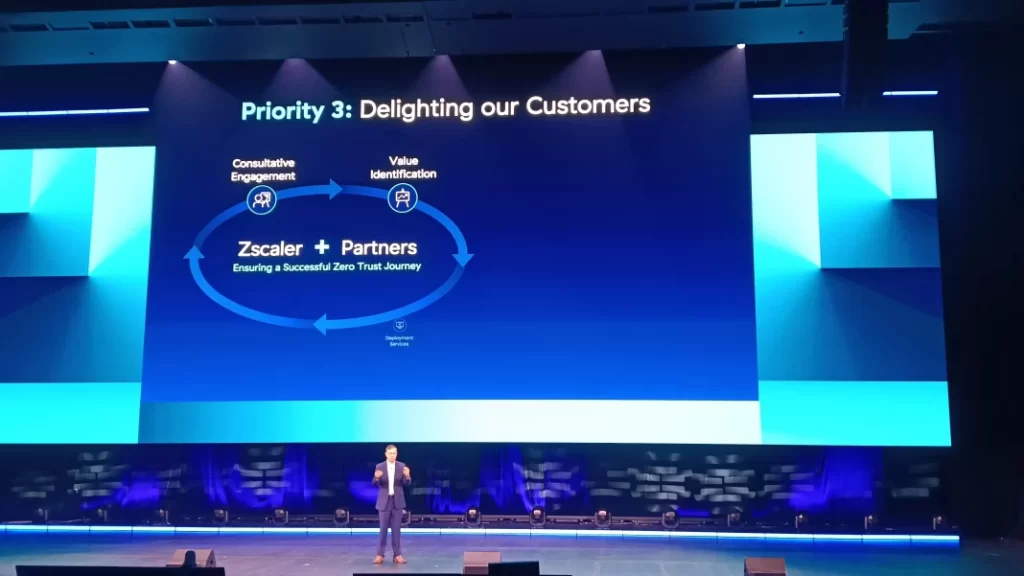
From firewalls to fabric at Zenith Live25: Zscaler’s journey to agentic SecOps Zscaler makes zero trust achievable and implementable at scale in a way that’s difficult with the network-based policy constructs of firewalls and VPNs. We find out how at the recently concluded Zenith Live 25 in Prague. During Zenith Live 25 in Prague, Enterprise IT News sat down with Adam Geller, Chief Product Officer at Zscaler, to discuss the company’s evolving product strategy, the impact of recent acquisitions, and how artificial intelligence is reshaping the cybersecurity landscape.  He provided a clear and comprehensive overview of where Zscaler used to be and the very exciting future it is headed towards, as the organisation continues to secure their customers’ environments and data.  Network constructs versus the business policy construct The main thing that makes Zscaler stand apart from other companies that offer Zero Trust capability is how they approach networking. “I think many companies subscribe to zero trust as an approach and so the principles are similar. Adam Geller “It’s a question of how well you can do it, and how you define it,” said Adam.  For example, a solution may be connecting the right business users to the right business applications, but they could be defining it via IP addresses or other network constructs. “So, you wind up being overly permissive in what you connect together,” Adam pointed out. He explained that, the organisation’s unique differentiator lies in its ability to enforce business policy at a granular level – connecting the right users to the right applications, regardless of network and location because it is able to move beyond network constructs like IP addresses and instead leverage identity and context to minimise unnecessary permissions and reduce risk. Crystallising the Zscaler mission to the market Adam had joined the company nine months ago, excited about the company’s mission of enabling any-to-any communication via business policies and leveraging networks only as transport. “So I’ve spent a fair amount of time with Jay Chaudhry, our founder and CEO, talking to him before I joined about what his vision was for the company and where he thought it could evolve to.” According to Adam, the zero trust concept means not ever trusting anything to connect to anything else until validation is done. “And the way you validate is you have to understand the identity of who or what that is asking to communicate or connect.” We recognise that we are more and more mission-critical for our customers. So we have and will continue to make substantial investments in all of our capabilities around zero trust everywhere, including expanding our footprint for global coverage. Adam Geller Earlier in his career, this CPO confessed he had found satisfaction in installing firewalls and working with network infrastructure.   Those days are long gone, and currently he emphasises that Zscaler makes zero trust achievable and implementable at scale in a way that’s difficult with the network-based policy constructs of firewalls and VPNs. This is due to the solution’s ability to secure and simplify network access without relying on complex network-based policies, effectively replacing the need for complex firewall configurations. “We recognise that we are more and more mission-critical for our customers. So we have and will continue to make substantial investments in all of our capabilities around zero trust everywhere, including expanding our footprint for global coverage.” Synergistic acquisitions According to Zscaler CEO Jay Chaudhry, the company processes over 500 billion transactions daily, a figure which is 50 times what Google Search processes every day. This translates to 500 trillion security signals across Zscaler’s global security cloud, which is derived from analysing hundreds of billions of transactions and requests. Calling this wealth of information a data asset, Jay also shared about customers who have asked Zscaler to do more with logs and the telemetry data which it collects.  Recognising the potential this data asset has in enabling better security operations or SecOps, the company had acquired Avalor and Red Canary with the objective of accelerating its vision of an agentic-based security operations centre (SOC). Agentic security operations Avalor’s capability entails building a data fabric that serves multiple applications, and it does this by taking transaction level info and telemetry, synthesising and deduplicating data, adding context, and creating entity relationships. Now, this foundational data intelligence layer is anticipated to power up Red Canary’s automation and investigation capabilities as an MDR (managed detection and response) solution, and ultimately enable different agent-based security operations like data collection, investigation, policy enforcement, and so on. There is potential to significantly reduce task execution from 40 minutes all the way down to 3 minutes. Jay explained, “We aren’t becoming an MDR company. We are fundamentally a technology company. This acquisition allows us to get to the market with a more comprehensive solution.  “Again, we will work with all the partners to make this technology available for you.”

Cybersecurity

Zscaler launches new solutions to strengthen and extend Zero Trust

Zscaler launches new solutions to strengthen and extend Zero Trust Advanced security solutions extend Zero Trust everywhere to protect data across branches, multi-cloud environments, and remote environments Zscaler, Inc., the leader in cloud security, announced a new suite of solutions that enable customers to quickly adopt Zero Trust Everywhere. These innovations extend the reach of true Zero Trust and enable businesses to modernize and scale securely by providing end-to-end segmentation between and inside branches and enhance security across multi-cloud environments. Organizations are increasingly distributed, rapidly adopting IoT, OT, and multi-cloud architectures and grappling with increasing digital complexity. Zscaler has unveiled innovative updates to the Zscaler Zero Trust Exchange™ platform, empowering businesses to extend Zero Trust Everywhere—across users, applications, devices, clouds, and branch locations. These enhancements make an organization’s branches and clouds invisible to bad actors, and eliminate the lateral movement of threats like ransomware within the organization’s network. With its expanded capabilities to strengthen Zero Trust Everywhere, Zscaler is advancing its cybersecurity postures, simplifying security network infrastructure, and making it easier for businesses to scale securely in today’s rapidly changing threat landscape. The following Zero Trust solutions—highlighted at Zenith Live 2025—are now generally available or accessible for select use cases by Zscaler customers. ● Unified Appliance for Zero Trust Branch: Zscaler’s Zero Trust Branch redefines enterprise security and networking with a unified appliance that secures communications between branches, campuses, and factories, and segments OT and IoT devices within them including legacy OT, with no downtime. The solution also provides newly introduced disposable jumpboxes that enables contractors secure, time-bound access to critical systems. By eliminating the need for firewalls, legacy NAC, cumbersome VLAN configurations and VDI for remote access, organizations can stop lateral threat movement with unparalleled efficacy. This approach not only elevates security, but also dramatically reduces complexity and costs, empowering businesses to modernize and scale faster without compromise. Unified Appliance for Zero Trust Branch is generally available. ● Zero Trust Gateway for Cloud Workloads: This cloud-native service on AWS enables organizations to secure communications from workload to the internet, and East-West traffic between workloads and VPCs/VNETs, in under 10 minutes without deploying agents or VMs with a Zscaler managed offering. This strengthens security in hybrid and multi-cloud environments, allowing organizations to reduce the attack surface associated with firewalls, and eliminate complexity and secure workload communications. Zero Trust Gateway is generally available. ● Zscaler Microsegmentation for Cloud Workloads: Zscaler further extends AI-driven segmentation to cloud workloads with newly introduced host-based Microsegmentation service that provides granular host and process level segmentation policies using its AI-powered Segmentation engine for Workloads in public clouds such as AWS and Azure as well as on-premise Data Center based workloads that run on bare metal. Zscaler Workload agent provides process and workload level metrics, traffic flows as well device context, that protects crown jewels against lateral threats and compromise. Zscaler Microsegmentation is generally available. ● Zero Trust Exchange for B2B: The introduction of B2B Exchange revolutionizes secure collaboration by providing a cutting-edge app-sharing platform for partner organizations, eliminating the need for outdated technologies like MPLS circuits or VPNs that come with complexity and the risk of oversharing. This solution accelerates seamless, secure connections between enterprises, empowering organizations to drive faster, more efficient mergers, acquisitions, and partnerships while safeguarding sensitive data. Zero Trust Exchange for B2B is available for select use cases, with extended capabilities coming soon. “Zscaler’s latest innovations for the Zero Trust Exchange truly extends Zero Trust Everywhere beyond users and redefines the enterprise security and networking by seamlessly unifying operations, strengthening threat defenses, and enabling secure connectivity across users, devices, applications, branches, and clouds with better visibility and experience—no matter how complex or distributed the environment,” said Dhawal Sharma, EVP Product Strategy, Zscaler. “With this expanded Zero Trust Everywhere approach, organizations can accelerate security modernization, mitigate risks, and protect data everywhere business happens. (This was adapted from a press release)

Cybersecurity

DigiCert study finds only 5% of enterprises have quantum-safe encryption

DigiCert study finds only 5% of enterprises have quantum-safe encryption     DigiCert, a leading global provider of digital trust, released findings from a new survey that uncovers a significant gap between enterprise awareness of quantum computing threats and actual preparedness.  The research shows that while 69% of organizations recognize the risk quantum computing poses to current encryption standards, only 5% have implemented quantum-safe encryption, and 46.4% report that substantial portions of their encrypted data could be compromised.   The findings highlight a critical inflection point: Enterprises know the quantum clock is ticking, yet few have taken meaningful steps to secure their digital future. With encryption underpinning everything from online banking and medical records to smart homes and cloud services, ensuring its strength and resilience is fundamental for protecting sensitive data.  “The quantum era presents both a significant risk and a transformative opportunity as we reach an inflection point for enterprise security,” said Kevin Hilscher, Senior Director of Product Management at DigiCert.  “Organizations should already be into the early phases of their quantum readiness plan – starting with asset discovery and risk assessment, with the ultimate goal of  crypto-agility. The groundwork being laid today will determine which organizations are positioned to maintain trust and resilience when quantum computing becomes a reality. DigiCert is supporting this journey with quantum-safe PKI solutions and frameworks that help enterprises manage complexity and take action with confidence.” Despite a majority (69%) of organizations believing quantum computers will break current encryption within five years, preparedness remains low: only 38% feel “very prepared” for quantum threats, while 19.2% claim they are “extremely prepared.”   This gap highlights a clear disconnect—enterprises recognize the threat but are slow to act due to perceived complexity, uncertainty, and believe that quantum computing is still a long way off.  With the largest stores of sensitive data, enterprises are also the most at risk. DigiCert’s research aims to bridge the gap between hype and action, providing clarity and strategy as cryptography evolves. It also points to a broader strategic opportunity: Enterprises can maximize return on investment in Public Key Infrastructure (PKI) by making quantum-readiness a key driver of their current security planning.  “The fact that only 5% of organizations have implemented quantum-safe encryption, despite widespread awareness of the threat, should be a wake-up call,” said Dr. Jim Goodman, CTO at Crypto4A.  “Migrating to post-quantum cryptography isn’t just a software patch—it’s a foundational shift that requires full visibility into your cryptographic environment, upgrades to hardware, migration to quantum-safe roots of trust, and cross-functional coordination. Those already underway are ahead of the curve and better equipped to handle what’s next.”  According to the 2025 edition of the book, “Post-Quantum Cryptography for Dummies,” DigiCert recommends four steps for organizations to transition to a quantum-safe security posture:  1. Inventory cryptographic assets. Organizations should first inventory their certificates, algorithms, and other cryptographic assets, prioritize them based on their level of criticality and decide what needs to be upgraded or replaced.  2. Prioritize replacing encryption algorithms for crypto that needs to be trusted for a long time. Examples include roots of trust, eSignatures and long-lived IoT devices.  3. Explore and test the ways your organization incorporates post-quantum cryptography (PQC) algorithms.  Begin testing upgrade paths and interoperability in non-production environments. 4. Become crypto-agile. After completing the inventory, achieving crypto-agility involves asset visibility, establishing methods for deploying encryption technologies and the ability to respond quickly when security issues arise. By identifying and managing crypto assets now, organizations can position themselves defensively against the threat of post-quantum cyberattacks and lay the foundation for a secure and trusted digital future. Research methodology This research was commissioned by DigiCert and conducted independently by Los Angeles-based Propeller Insights, which surveyed 1,042 senior and C-level cybersecurity managers in the United States, the United Kingdom and Australia.  About DigiCert DigiCert is a leading global provider of digital trust, enabling individuals and businesses to engage online with the confidence that their footprint in the digital world is secure. DigiCert® ONE, the platform for digital trust, provides organizations with centralized visibility and control over a broad range of public and private trust needs, securing websites, enterprise access and communication, software, identity, content and devices. DigiCert pairs its award-winning software with its industry leadership in standards, support and operations, and is the digital trust provider of choice for leading companies around the world. For more information, visit www.digicert.com or follow @digicert. (Adapted from press release).

Scroll to Top