
Cloudflare’s top 3 trends defining technology in 2026
Cloudflare’s top 3 trends defining technology in 2026 By Kenneth Lai, VP, ASEAN, Cloudflare
Cloudflare’s top 3 trends defining technology in 2026 By Kenneth Lai, VP, ASEAN, Cloudflare

Alibaba Cloud, the digital technology and intelligence backbone of Alibaba Group, has further strengthened its longstanding collaboration with CapitaLand Group (CapitaLand), one of Asia’s largest diversified real estate groups. Alibaba Cloud has signed a Memorandum of Understanding with CapitaLand to leverage Alibaba Cloud’s cloud infrastructure and artificial intelligence (AI) applications to accelerate CapitaLand’s digital transformation in China, driving commercial excellence and delivering exceptional customer experiences.

This helps businesses align with evolving data privacy regulations, enhancing data security, and fostering trust among customers and stakeholders by demonstrating a commitment to compliance.

Her career began in hands-on implementation, delivering complex Microsoft deployments across industries and geographies, before transitioning into sales leadership roles where she built trusted client partnerships across the region.

With these integrations, Cloudflare customers also using these generative AI applications will be able to strengthen enterprise AI security – in-real time and without the need for complex set ups.
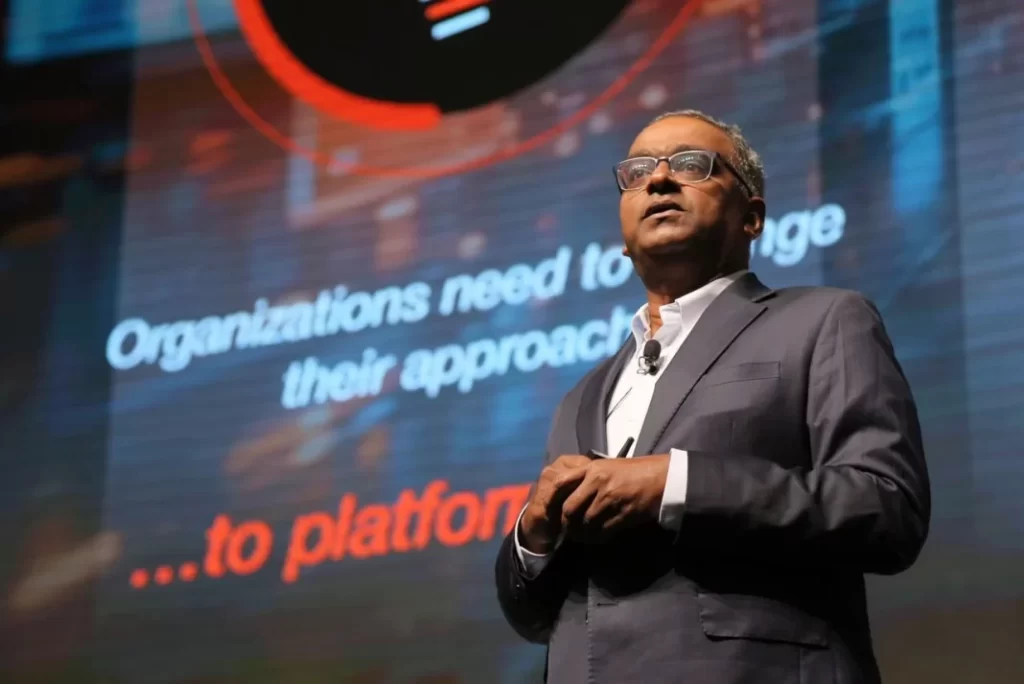
Cloud security at the crossroads: Malaysia’s digital transformation opportunity As Malaysia stands at the precipice of significant cloud adoption, the cybersecurity landscape is poised for dramatic transformation escalated by rapid digitalisation and ambitions to become a data centre and cloud hub. In an exclusive interview with Enterprise IT News, Shailesh Rao, President of Cortex at Palo Alto Networks, offered a compelling perspective on the challenges and opportunities that lie ahead for organisations navigating this digital frontier. The triple threat of cloud transformation Drawing from his extensive experience working with more than 500 companies over the past 18 months, Rao identifies three fundamental shifts that will reshape Malaysia’s cybersecurity posture as cloud adoption accelerates. “While there will be a lot of benefits coming from the cloud—compute, efficiency, cost benefits and scale benefits—the attack surface expands as well,” explained Shailesh, whose division develops AI-powered platforms for security operations centres and the cloud. This expansion creates vulnerabilities that traditional security approaches simply weren’t designed to address. Shailesh pointed to other nations that have already undergone similar digital transformations. “As more and more data centres come online, I anticipate just a sheer volume of companies that move to the cloud. This creates a whole new paradigm for security to be provided,” he stated. The industry veteran pointed to the growing trend of hybrid deployments as a particular challenge. Organisations are increasingly spreading workloads across on-premises systems and multiple cloud environments—a strategy that complicates security but is necessary. “One of the benefits of being in the cloud is that you don’t have to put all your eggs in one basket,” he observed. “And when you have a multi-cloud environment, that is where we (Palo Alto Networks) shine and do a very good job of protecting because we are a neutral third party that can provide cybersecurity services.” The second transformation involves the evolving nature of applications that require protection. As organisations develop cloud-native applications designed to leverage elasticity and AI capabilities, security requirements fundamentally change. These applications operate differently from traditional software, demanding specialised protection strategies. Perhaps most concerning is Shailesh’s third observation: cloud environments have become prime targets for sophisticated threat actors. As valuable data and critical workloads migrate to these platforms, attackers are rapidly adapting their techniques to exploit vulnerabilities in these new environments. The Talent Deficit Having traversed the globe consulting with organisations on their security posture and the benefits of platformisation, Shailesh highlighted a persistent challenge that exacerbates security risks: the scarcity of qualified cybersecurity professionals. And when you have a multi-cloud environment, that is where we (Palo Alto Networks) shine and do a very good job of protecting because we are a neutral third party that can provide cybersecurity services. Shailesh Rao “Machine learning and AI are not only hugely beneficial but possess potential to change the world from a cybersecurity perspective,” he explained. These technologies have become essential precisely because human expertise alone cannot scale to meet current threats—especially given the talent shortage. This deficit affects even major cloud providers, who must prioritise their resources. “Due to scarcity of resources, engineering talent, cloud service providers will very likely pay attention to their own technology stack,” he noted. While providers secure their infrastructure, this focus creates gaps that organisations must address quickly. Shared responsibility misconceptions The interview reveals that despite the robust security capabilities of hyperscalers like Microsoft, AWS, and Google, two critical factors frequently undermine cloud security. First, the multi-cloud trend introduces complexity that makes consistent security difficult to achieve. “The very fact that a company is in the cloud means it has the option to be multi-cloud. So, you don’t have to put your risk into one place,” the Cortex chief explained. While this approach reduces dependency on any single provider, it requires sophisticated security strategies that work across disparate environments. Second, and perhaps more troubling, is human error. Shailesh pointed out many recent high-profile breaches have occurred not because of technological failures but because of misconfigurations, poor access controls, and other mistakes made by users and administrators. Even perfectly designed systems remain vulnerable to this unpredictable variable. Southeast Asia’s cloud evolution Compared to Western counterparts, Southeast Asian nations have adopted a more measured approach to cloud migration. Shailesh described a three-phase evolution that characterises this journey: Initially, organisations move from on-premises environments to local cloud providers. As businesses gain confidence with cloud concepts, they explore more sophisticated implementations. Finally, they adopt major public cloud platforms while addressing data residency requirements. “As regulations evolve, as people get more comfortable and as market dynamics dictate, I think we will move towards more global clouds with lesser boundaries,” he predicted. “This is what’s happening in most western economies, and it will happen here as well.” Navigating regulatory waters Malaysia’s recent cybersecurity legislation represents a significant development in the country’s digital governance framework. When asked about these requirements, Shailesh offered a pragmatic perspective informed by his company’s global experience. “We’ve managed the presence of regulations in all the countries that we operate in, and for the most part regulations have evolved over time,” he explained. “As that happens, the market evolves and our awareness evolves. So, I expect that to happen in Malaysia as well.” As head of a division within a company that he described as “the largest pure-play cybersecurity company in the world with operations in over 70 countries,” Shailesh emphasised Palo Alto Networks’ commitment to regulatory compliance while enabling cloud adoption. Looking forward For organisations navigating Malaysia’s cloud transformation, Shailesh underscored the importance of partnering with experienced security providers. “You need a partner that has been there, done that, has continued to innovate and can provide the most comprehensive, pre-integrated, most complete solution set in the market,” he advised. As Malaysia and the rest of the region continues its digital transformation journey, Shailesh’s insights offer valuable guidance for organisations seeking to balance innovation with cybersecurity. This perspective reflects a fundamental reality of modern cybersecurity: as cloud adoption accelerates, the traditional boundaries between on-premises and cloud security

Oracle and Infobip partner to deliver global conversational experiences Infobip’s new partnership addresses challenges of time, complex development, deployment, and organizational processes. Global cloud communications platform Infobip announced that it has enhanced its partnership with Oracle to bring conversational experiences to businesses and brands globally. The new integration enables Infobip and Oracle customers and partners to access Infobip’s omnichannel services through Oracle Integration. Customers increasingly expect omnichannel communications, but integrating and managing new channels can be time-consuming, requiring complex development, deployment, and organizational processes. Infobip’s new Omnichannel Messaging Adapter for Oracle Integration addresses this challenge by enabling all types of businesses to work with and manage omnichannel messaging channels involving Oracle and third-party solutions, including WhatsApp and RCS. The solution deploys quickly, reducing time to market. “Our new collaboration with Infobip will help enterprises simplify connectivity and provide integration between the Infobip messaging platform and any applications using our unified integration platform as a service, Oracle Integration – Deepak Arora In addition, Infobip has provided a prebuilt use case – or Accelerator – for Oracle’s contact center solution, Oracle B2C Service. This Accelerator is a flexible solution that allows consumers to connect with a company’s support team via SMS and WhatsApp, delivering a streamlined two-way communication experience. Both the Omnichannel Messaging Adapter and Accelerator offer low or no-code solutions, benefiting Oracle’s customers and partners. Oracle Integration provides secure, highly scalable connectivity regardless of the applications an organization is connecting with or where the applications reside. “Our new collaboration with Infobip will help enterprises simplify connectivity and provide integration between the Infobip messaging platform and any applications using our unified integration platform as a service, Oracle Integration,” said Deepak Arora, Vice President, Product Management, Oracle. “This partnership builds on our vision of fueling AI innovation for more businesses by integrating any apps, data, and services anywhere.” “The Omnichannel Messaging Adapter for Oracle Integration enables Infobip and Oracle customers to tailor our omnichannel solutions to their specific needs using the same platform with just a few clicks,” said Veselin Vuković, Chief Alliances Officer, Infobip, “The solution is flexible and works for a broad range of sectors and industries.” About Infobip Infobip is a global cloud communications platform that enables businesses to build connected experiences across all stages of the customer journey. Accessed through a single platform, Infobip’s omnichannel engagement, identity, user authentication and contact centre solutions help businesses and partners overcome the complexity of consumer communications to grow business and increase loyalty. It offers natively built technology with the capacity to reach over seven billion mobile devices and ‘things’ in 6 continents connected to over 9,700+ connections of which 800+ are direct operator connections. Infobip was established in 2006 and is led by its co-founders, CEO Silvio Kutić, Roberto Kutić and Izabel Jelenić. About Oracle’s Partner Program Oracle’s partner program helps Oracle and its partners drive joint customer success and business momentum. The newly enhanced program provides partners with choice and flexibility, offering several program pathways and a robust range of foundational benefits spanning training and enablement, go-to-market collaboration, technical accelerators, and success support. To learn more, visit https://www.oracle.com/partner/. (Adapted from press release).