
Author name: Editorial Team

Verticals

Smart manufacturing gets smarter with industrial AI

Smart manufacturing gets smarter with industrial AI This year’s report highlights the rising pressures on manufacturers: ongoing supply chain disruptions, shifting trade policies, evolving regulations, and growing cybersecurity threats. . By Marcelo Tarkieltaub, regional director, Southeast Asia Rockwell Automation’s newly released 10th edition of the State of Smart Manufacturing Report (SOSM) provides a global pulse on the industry’s most pressing challenges and emerging opportunities. Drawing on insights from over 1,500 manufacturers across 17 countries, the findings underscore how manufacturers are navigating a rapidly changing landscape. This year’s report highlights the rising pressures on manufacturers: ongoing supply chain disruptions, shifting trade policies, evolving regulations, and growing cybersecurity threats. Internally, companies are also grappling with workforce challenges, rising operational costs, and growing demands for agility and productivity. More than 94% of APAC manufacturers surveyed have either invested or plan to invest in artificial intelligence/machine learning (AI/ML), generative AI (GenAI), or causal AI over the next five years. AI isn’t just about automation, it’s about transformation. Manufacturers are applying it to some of their most pressing challenges: 47% plan to use it for quality control, 44% for cybersecurity, and 43% for process optimization. The report identifies three key forces accelerating the shift toward industrial AI: increasing complexity, rising cybersecurity risks, and workforce challenges. Navigating Complexity with AI Global supply chains are becoming more fragmented due to geopolitical shifts, trade restrictions, and changing sourcing strategies. Meanwhile, customer expectations are evolving just as fast—demanding greater speed, customization, and quality. These dynamics require faster, smarter decision-making across the enterprise. Industrial AI is proving critical in this transformation. By enhancing demand forecasting, production scheduling, and logistics planning, AI helps manufacturers respond with speed and precision. In fact, 81% of manufacturers in the study cite improving internal efficiency and sharpening external competitiveness as the primary goals of their digital transformation initiatives. Manufacturers leading the way are already seeing results: Predictive maintenance: AI helps to anticipate equipment failures, reduce unplanned downtime and extend asset life. Real-time quality control: Computer vision systems catch defects in milliseconds, improving first-pass yield. Dynamic process optimization: AI continuously adjusts variables like energy use and line speed to boost efficiency—without sacrificing quality. Addressing Cybersecurity with Intelligence As factories become more connected, they also become more vulnerable. Cybersecurity has surged to become the second-highest external threat to business growth—up significantly from previous years. Facing strict international compliance requirements and the desire to improve production efficiency, Pharbaco turned to Rockwell Automation and its local OEM (original equipment manufacturer) partner Qui Long, to implement a smart manufacturing solution. Marcelo Tarkieltaub This is not surprising considering that manufacturing is a key target for ransomware, accounting for 21% of global attacks. In response, manufacturers globally are turning to AI/ML to help fortify their cyber defenses. Nearly half (49%) plan to use AI for cybersecurity, up from 40% in 2024. Key use cases include: Detecting anomalies in IT and OT systems before they escalate Automating threat response to reduce downtime and exposure Gaining real-time visibility across the enterprise Predicting and containing attacks before they cause damage Bridging the Skills Gap In fast-growing regions like Southeast Asia, manufacturers face a dual challenge: a widening skills gap driven by rapid technological change and shortage of digitally skilled talent. To close this gap, 41% of manufacturers globally are turning to AI and automation—while also investing in upskilling and reskilling their workforce. Nearly half (48%) plan to repurpose or hire talent to support smart manufacturing, and 35% are exploring digital twin and simulation technologies for training and operational support. AI can play a pivotal role in workforce enablement: Automating routine, labor-intensive tasks like material handling and inspection Supporting faster onboarding through immersive training tools Enhancing human decision-making with real-time insights that improve safety, accuracy, and productivity Industrial AI in Action: Pharbaco success story Adoption of industrial AI is moving from pilot projects to full-scale integration. A compelling example is Pharbaco, a leading pharmaceutical manufacturer in Vietnam. Facing strict international compliance requirements and the desire to improve production efficiency, Pharbaco turned to Rockwell Automation and its local OEM (original equipment manufacturer) partner Qui Long, to implement a smart manufacturing solution. By leveraging AI-enabled HVAC automation, continuous environmental monitoring, and integrated IT/OT systems with platforms like FactoryTalk software and Logix controllers, the company achieved: Over 45% reduction in energy use Enhanced compliance through automated data reporting Improved process control and cleanroom efficiency Pharbaco’s experience shows how embedding intelligence into every layer of operation—from building systems to production lines—can drive measurable results and long-term scalability. A Defining Moment for Southeast Asia The latest SOSM report doesn’t just highlight trends—it offers a blueprint. Whether organizations are beginning their smart manufacturing journey or scaling up, the approach is consistent: identify priority challenges, align AI use cases to real business needs, and balance technological innovations with human expertise. For manufacturers ready to evolve, the message is clear: smart starts now. And those who act with purpose—pairing technology with talent—will be the ones to lead the next era of industrial innovation.


Network

NTT DATA and Cisco Partner to Power Networking for the AI Era

New IDC Study Sponsored by NTT DATA and Cisco Guides Network Modernisation for AI Transformation NTT DATA, a global leader in digital business and technology services, and Cisco today unveiled a new co-sponsored IDC InfoBrief, Wired for Intelligence: A CIO Guide to Enterprise Networking for AI. The study shares strategic guidance for organizations seeking to accelerate transformation by modernizing their network infrastructure.   As organizations integrate AI into more applications, from manufacturing and healthcare to financial services, the demand for high-speed, low-latency, and secure networks is surging. Legacy infrastructure is no longer sufficient to support the scale and complexity of AI workloads. NTT DATA and Cisco are responding to this shift by helping clients evolve from outdated architectures to intelligent, adaptive infrastructure that can power AI-driven innovation. “As two market leaders, NTT DATA and Cisco are well positioned to help clients modernize their digital infrastructure foundations for the AI era. The network exists as a catalyst for growth and organizations can unlock powerful new capabilities and achieve AI-driven business transformation at scale,” said Dilip Kumar, Global Head, Technology Solutions, NTT DATA, Inc. The Critical Foundation Empowering AI-Driven Growth The study highlights that network modernization is at the heart of AI success. More than 78% of companies say that networking capabilities are either important or very important when selecting providers for GenAI infrastructure — underscoring the need for networks that can handle and secure ever-scaling AI workloads while running complex AI training, inference, and storage clusters with ease. At the same time, modernization also infuses AI into network operations through AI-driven configuration, anomaly detection, self-healing, and intelligent monitoring to accelerate issue resolution and elevate user experience. Already, industries like manufacturing, healthcare, and financial services are leveraging AI in networking to improve operational efficiency, ensure secure connectivity and reduce costs. “Network modernization is about more than replacing old hardware—it’s about allowing enterprises to lead in an AI-driven world,” said Brink Sanders, Senior Vice President of Global Networking Sales, Cisco. “Our partnership with NTT DATA equips clients with the technology and expertise needed to build secure and connected networks.” “Your network will make or break your AI transformation. Overcoming the challenges of legacy networking technologies is essential. This IDC InfoBrief gives organizations the steps to transform enterprise networking from a bottleneck into a business advantage,” said Chris Barnard, Vice President, European Telecoms and Infrastructure, IDC. NTT Data is Enabling Modernisation Through Intelligent Services NTT DATA’s comprehensive suite of intelligent services helps clients modernize their digital infrastructure and build secure networks. These services span the full lifecycle from advisory to sourcing, professional services, support and managed services to enable organizations to modernize and unlock the full potential of AI. With many companies undergoing hardware refresh cycles due to the emergence of AI, NTT DATA’s services are designed to meet this critical moment: Advisory: Strategic guidance to align network modernization with AI goals.  Strategic Technology Sourcing: Recommending and procuring the right technology to transform network to be AI-ready.  Professional Services: Architecting and deploying scalable, secure and high-performance networks.  Software-Defined Infrastructure Services: Driving business outcomes through adoption of automation and AI agents into infrastructure operations and license optimization. Adoption Services: Maximizing value from infrastructure investments through greater adoption of software, continuous improvement and change management. Managed Network Services: End-to-end network management to ensure seamless data flow from edge to cloud, minimizing latency and enhancing application responsiveness. NTT DATA recently launched AI-powered Software Defined Infrastructure (SDI) services for Cisco products to deliver intelligent automation and real-time insights to optimize infrastructure, reduce costs, and drive business outcomes.   About NTT Data NTT DATA is a $30+ billion trusted global innovator of business and technology services. We serve 75% of the Fortune Global 100 and are committed to helping clients innovate, optimize and transform for long-term success. As a Global Top Employer, we have experts in more than 50 countries and a robust partner ecosystem of established and startup companies. Our services include business and technology consulting, data and artificial intelligence, industry solutions, as well as the development, implementation and management of applications, infrastructure and connectivity. We are also one of the leading providers of digital and AI infrastructure in the world. NTT DATA is part of NTT Group, which invests over $3.6 billion each year in R&D to help organizations and society move confidently and sustainably into the digital future. Visit us at nttdata.com About Cisco Cisco (NASDAQ: CSCO) is the worldwide technology leader that is revolutionizing the way organizations connect and protect in the AI era. For more than 40 years, Cisco has securely connected the world. With its industry leading AI-powered solutions and services, Cisco enables its customers, partners and communities to unlock innovation, enhance productivity and strengthen digital resilience. With purpose at its core, Cisco remains committed to creating a more connected and inclusive future for all. Discover more on The Newsroom and follow us on X at @Cisco.   Cisco and the Cisco logo are trademarks or registered trademarks of Cisco and/or its affiliates in the U.S. and other countries. A listing of Cisco’s trademarks can be found at http://www.cisco.com/go/trademarks. Third-party trademarks mentioned are the property of their respective owners. The use of the word ‘partner’ does not imply a partnership relationship between Cisco and any other company.

Verticals

Unilab taps RISE with SAP on AWS to drive digital transformation

Unilab taps RISE with SAP on AWS to drive digital transformation Unilab is adopting RISE with SAP on Amazon Web Services (AWS) to enhance decision-making and operational efficiency. This transition will modernize its core ERP systems and introduce new solution components and capabilities, powered by SAP Business Suite, including SAP Business AI and SAP Business Technology Platform (SAP BTP), equipping Unilab with the agility to better navigate the complexities of the pharmaceutical industry.   SAP announced that Unilab, Inc., Philippines’ largest pharmaceutical and healthcare company, has embarked on a strategic business transformation initiative powered by RISE with SAP, a comprehensive transformation journey to help enterprises transition to cloud ERP and unlock the full potential of SAP Business Suite. More than just a technology upgrade, this transformation will enable Unilab to reimagine its business processes with AI-powered enterprise applications. As Unilab commemorates its 80th anniversary in 2025, the company is preparing for the future by leveraging SAP S/4HANA Cloud – offered as part of RISE with SAP – to drive standardization, operational efficiency, and economies of scale. Having implemented SAP ERP Central Component (SAP ECC) since 2005 as the ERP platform to support its operations in the Philippines, Unilab’s next 20-year vision is to ensure long-term competitiveness while optimizing operations across markets. To further strengthen its operations, Unilab is adopting RISE with SAP on Amazon Web Services (AWS) to enhance decision-making and operational efficiency. This transition will modernize its core ERP systems and introduce new solution components and capabilities, powered by SAP Business Suite, including SAP Business AI and SAP Business Technology Platform (SAP BTP), equipping Unilab with the agility to better navigate the complexities of the pharmaceutical industry. Additionally, Unilab is streamlining its supply chain and manufacturing processes, and integrating more automation and data analytics to drive greater efficiency. “Twenty years ago, we were running on multiple tech platforms, but it was a much simpler business back then,” said Sebastian Frederick Baquiran, President and CEO, Unilab, Inc. “Today, not only does Unilab Group have a strong product business in pharmaceuticals, we now have a significant and growing healthcare service business.  It is our vision to be the champions of healthcare and life sciences in this part of the world… and this moment presents a golden opportunity to further streamline and enhance our processes and policies.” “Unilab’s adoption of RISE with SAP on AWS underscores how leading organizations in Philippines are embracing innovation and cloud technology to tackle complex industry challenges,” said Jill Santos, Managing Director, SAP Philippines. “By modernizing its core systems with SAP S/4HANA Cloud and leveraging standardized framework and proven transformation methodology offered in RISE with SAP, Unilab is building a future-ready enterprise—one that is more agile, operationally efficient, and competitive in the evolving pharmaceutical landscape.” Visit the SAP News Center.  (Adapted from press release)

Verticals

Deploying Celonis is enabling ASOS to deliver a superior shopping experience

Deploying Celonis is enabling ASOS to deliver a superior shopping experience   Celonis gives ASOS unprecedented insights into key operational areas like end-to-end supply chain optimisation, carrier performance, and operations. Leading online fashion retailer ASOS is making significant changes to its supply chain to increase speed to market and improve customer experience. In partnership with Celonis, a global leader in Process Mining, ASOS is connecting its end-to-end supply chain to provide full visibility, transparency and accountability. The result is enabling reductions in process variation, increasing speed to market, and improving the customer experience.”ASOS is a prime example of how leading retailers can use Process Intelligence to transform their operations,” said Rupal Karia, General Manager for UKI and MEA at Celonis. “With Celonis, ASOS gets unprecedented visibility into its end-to-end supply chain and can identify and act upon opportunities for improvement in real-time. Together, we’re unlocking the full potential of ASOS’ supply chain to deliver faster, smarter, and more efficient operations at scale.” Transforming ASOS’ Supply Chain and driving speed to customer ASOS operates in a highly dynamic and competitive market where speed to customer is a critical differentiator. Leveraging the Celonis Process Intelligence platform and its object-centric process mining technology, ASOS can connect its product, inbound supply chain, logistics and outbound delivery and returns teams, providing a holistic, real-time view of the full supply chain process. This enables ASOS to gain actionable insights into key supply chain performance metrics to help drive faster, more reliable order fulfillment​. “With Celonis, we’ve connected our entire supply chain – from intake and inbound to outbound and returns – enabling teams to break down silos, streamline processes, cut costs, and deliver the latest trends to customers faster,” said Laurence Moore, Head of Strategic Projects, Supply Chain at ASOS. Celonis gives ASOS unprecedented insights into key operational areas, including: End-to-End Supply Chain Optimisation: ASOS can now monitor and optimise its entire inbound logistics process, tracking thousands of SKUs and containers from purchase order creation to final warehouse placement. This has significantly enhanced visibility across ASOS’ supply chain, enabling teams to see how different processes impact one another​. Returns and Carrier Performance Management: ASOS is leveraging Celonis to track third-party carrier performance and SLA adherence. This visibility is enabling better tracking of returns and optimising carrier performance management, strengthening its bottom line while enhancing customer satisfaction​. Upstream and Downstream Operations: By providing insights into product performance, returns, and pricing trends, Celonis helps ASOS’ commercial and merchandising teams make data-driven decisions on vendor investments and pricing strategies, ensuring better product planning. Simultaneously, Celonis enhances customer experience and cost efficiency with the ability to have proactive communication – alerting customers to potential delivery or returns delays before they contact support, reducing call centre volume and operational costs.  Scaling Process Intelligence across ASOS As part of its long-term digital transformation strategy, ASOS is exploring ways to expand Celonis across multiple business functions, including Purchase-to-Pay, Order Management, IT Service Management, and Warehouse Management​. With real-time process monitoring, ASOS can further enhance efficiency and reduce costs. (Adapted from PR communications) 

Verticals

Panasonic Information Systems secures access to thousands of servers with CyberArk

Panasonic Information Systems secures access to thousands of servers with CyberArk   As part of the Panasonic Transformation (PX) initiative, Panasonic Information Systems aimed to address inefficiencies arising from a manual approach to privileged access management across an estate of thousands of Windows and Linux servers, with server administrators also being responsible for inventory checks and asset management enquiries. CyberArk, the global leader in identity security, announced that Panasonic Information Systems Co. Ltd. has implemented the CyberArk Identity Security Platform to secure privileged access to thousands of servers across the Panasonic Group as part of its digital transition initiative. Now Panasonic Information Systems has a modern, automated privileged access management environment, ensuring that all users and identities across the organization are secured with the right level of privilege controls.  The Panasonic Group is a Japanese multinational electronics company involved in consumer electronics, home appliances, automotive, industrial systems, and more.  Panasonic Information Systems drives the IT strategy for the Group and oversees the planning, development, and operations of its information systems across its business including retail, distribution and manufacturing. As part of the Panasonic Transformation (PX) initiative, Panasonic Information Systems aimed to address inefficiencies arising from a manual approach to privileged access management across an estate of thousands of Windows and Linux servers, with server administrators also being responsible for inventory checks and asset management enquiries. In addition, Panasonic Information Systems intended to upgrade existing privilege management tools, which offered limited visibility into access requests and approvals. “One of the key priorities of our digital transformation is strengthening our security defenses globally,” said Hiroshi Yagi, Director, Professional Services Department, Platform Services Division, Panasonic Information Systems Co., Ltd. “With CyberArk, we have made significant progress by modernizing our approach to privileged access at scale and standardizing security policies throughout the organization.” Panasonic Information Systems implemented CyberArk Privileged Access Manager, part of the CyberArk Identity Security Platform, to centralize and automate the granting of privileged access to servers across the Group. Panasonic Information Systems now has visibility into who accessed which server, when, and what operations were performed, providing an audit trail and improving post-incident investigations. Credentials and passwords are hidden from users and automatically granted and rotated within CyberArk. “Threat actors today continue to develop new identity-centric attacks, necessitating a shift in how privileged access is secured,” said Mitsuro Kakizawa, Regional Director, Japan at CyberArk. “CyberArk has equipped Panasonic Information Systems with the ability to secure privileged access for all identities, in any environment, from anywhere, increasing cyber resilience and allowing for greater operational efficiencies.”  “We’re proud to welcome Panasonic Information Systems to our customer community,” said Matt Cohen, Chief Executive Officer of CyberArk. “In today’s modern enterprise, any identity can become privileged at any moment, making it essential to have strong identity security controls in place. That’s why leading organizations trust CyberArk to protect their most critical assets.” About CyberArk CyberArk (NASDAQ: CYBR) is the global leader in identity security, trusted by organizations around the world to secure human and machine identities in the modern enterprise. CyberArk’s AI-powered Identity Security Platform applies intelligent privilege controls to every identity with continuous threat prevention, detection and response across the identity lifecycle. With CyberArk, organizations can reduce operational and security risks by enabling zero trust and least privilege with complete visibility, empowering all users and identities, including workforce, IT, developers and machines, to securely access any resource, located anywhere, from everywhere. Learn more at cyberark.com. (Adapted from press release)

Data Centres, Verticals

Nokia and Converge to deploy Data Center solution for high speed digital services

Nokia and Converge to deploy Data Center solution for high speed digital services     Nokia anticipates its collaboration with Converge, will enable them to play a bigger role in the Philippines’ growing data center industry. The Nokia 7220 IXR is a crucial component of Nokia’s Data Center Fabric solution and is designed to meet the high connectivity demands. Nokia announced that leading Philippine fiber and technology solutions provider Converge ICT Solutions Inc. will use its Data Center Fabric solution – a switching platform composed of both hardware and software – to future-proof its new data centers in the Philippines by using Artificial Intelligence (AI) and automation technology. The solution will empower Converge to enhance network performance, scalability and efficiency while improving service agility. Converge will also be able to ensure sovereign cloud readiness for regulatory compliance. “As Converge and many forward-looking technology companies increasingly host AI applications, we need to ensure there is seamless integration with traditional applications. We see AI workloads and high-performance computing (HPC) to becoming an essential part of our operations so we’re prepping our data center networks to be designed for extreme scalability and reliability,” said Converge CEO and Co-Founder Dennis Anthony Uy. Nokia’s 7220 Interconnect Router (IXR) data center switches, running the next-generation SR-Linux network operating system (NOS) and Event-Driven Automation (EDA) platform, will enable Converge to drive operational excellence by enhancing network simplicity. The operator will be able to ensure more sustainable operations by using automation to reduce energy consumption. Nokia’s Data Center Fabric solution delivers a consistently high-quality experience while addressing the growing demands of AI-driven workloads. “This crucial initiative with Nokia reflects our commitment to continuously adopt next-generation technology solutions to provide consistently high-quality experience to our customers. Nokia’s industry-leading solutions will help us prepare our infrastructure for future demands. The use of automation and AI will enable us to ensure regulatory compliance and to enhance network operations to gain a business edge,” said Paulo Martin Santos, Chief Network Transformation Officer at Converge. “With this collaboration with Converge, we are looking forward to playing a bigger role in the Philippines’ growing data center industry. Our solutions are designed to empower data center operators, like Converge, to leverage AI-powered automation to ensure unmatched reliability and scalability to prepare the digital infrastructure for the future,” said Kent Wong, Vice President and Head of IP Networks, Asia Pacific at Nokia. Nokia’s EDA provides improved response time and ensures consistent performance even as it consumes reduced computing resources. Nokia 7220 IXR is a crucial component of Nokia’s Data Center Fabric solution and is designed to meet the high connectivity demands. It provides fixed-configuration, high-capacity platforms that enable unparalleled scale, flexibility and operational simplicity to the data center networks. About Nokia At Nokia, we create technology that helps the world act together. As a B2B technology innovation leader, we are pioneering networks that sense, think and act by leveraging our work across mobile, fixed and cloud networks. In addition, we create value with intellectual property and long-term research, led by the award-winning Nokia Bell Labs, which is celebrating 100 years of innovation. With truly open architectures that seamlessly integrate into any ecosystem, our high-performance networks create new opportunities for monetization and scale. Service providers, enterprises and partners worldwide trust Nokia to deliver secure, reliable and sustainable networks today – and work with us to create the digital services and applications of the future. About Converge ICT Solutions, Inc. Converge Information and Communications Technology Solutions, Inc. (PSE:CNVRG) is the fastest-growing fixed broadband service provider in the Philippines. It is the first to run an end-to-end pure fiber internet network in the country, providing Filipinos simple, fast, and reliable connectivity. With over 710,000 kilometers of fiber optic assets nationwide, it has one of the most extensive fiber networks in the Philippines. With this fiber-powered network, Converge provides premium world-class digital experience for residential, enterprise, and wholesale customers.   (Adapted from press release)

Verticals

Introducing Al Rajhi Bank’s new and refreshed mobile app in Malaysia

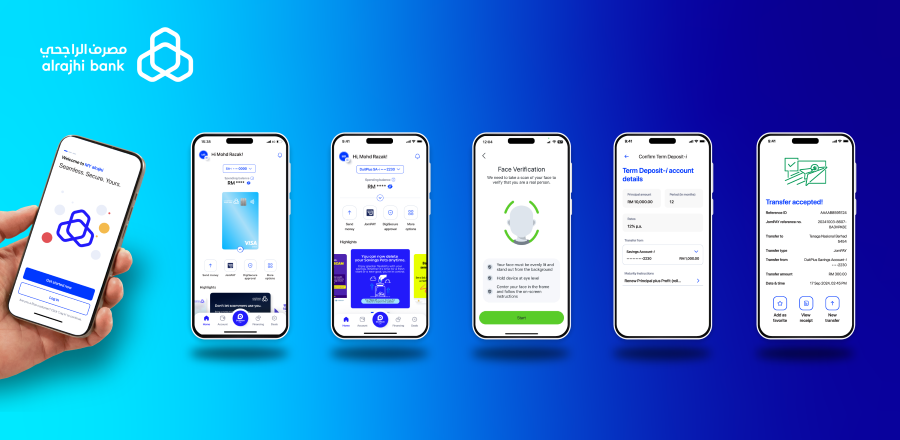
Introducing Al Rajhi Bank’s new and refreshed mobile app in Malaysia   The average Malaysian conducts 409 e-payments annually; more than one per day–marking a 19% year-on-year rise in 2024. As Malaysians transact more than ever before, alrajhi bank Malaysia launches Hi MY alrajhi Save & Earn, a multi-reward campaign designed to celebrate and supercharge the nation’s shift to digital banking – just as it rolls out its fully refreshed MY alrajhi app. Digital payments are booming; online banking grew 24% last year, with mobile banking now accounting for 62% of all online transactions–up from 50% in 2023. . Meanwhile, the average Malaysian conducts 409 e-payments annually; more than one per day–marking a 19% year-on-year rise in 2024. . Against this backdrop, MY alrajhi combines intuitive design with enhanced features thatmake saving, paying and managing money effortless. “Today’s launch comes at a pivotal moment in Malaysia’s digital journey,” said Syahrul Ishak, Chief Executive Officer of alrajhi bank Malaysia. “With the revamped MY alrajhi app, we are not just offering convenient banking; we are also rewarding every customer’s step towards a more connected financial life. Hi MY alrajhi Save & Earn amplifies that promise–because every ringgit saved or spent should bring you closer to your goals”. About Al Rajhi Banking & Investment Corporation (Malaysia) Bhd (alrajhi bank Malaysia)alrajhi bank Malaysia is a wholly owned subsidiary of Al Rajhi Bank Kingdom of Saudi Arabia (KSA), one of the world’s largest banks and the largest in the Middle East and KSA. Incorporated locally in October 2005 and launched in 2006, it was the first Saudi Arabian bank to operate in Southeast Asia. As part of a leading Shariah-compliant banking group, alrajhi bank Malaysia is instrumental in bridging modern financial demands with intrinsic values, spearheading numerous industry standards and developments. (Adapted from a press release)

Data Centres

Univers and Microsoft to advance data centre energy efficiency 

Univers and Microsoft to advance data center energy efficiency     The key parts of the collaboration also include the integration of Univers’ award-winning EnOS™ Ark platform with Microsoft data and AI services, which enables organizations to track, manage, and optimize energy use and carbon footprints. Univers, a global leader in AI and IoT technology for energy, has announced it will integrate Microsoft technologies and collaborate with Microsoft globally to accelerate the transition to sustainable energy through cutting-edge AI and cloud solutions.  This Memorandum of Understanding (MOU) announcement is made in London during One Univers London, Univers’ flagship executive forum held in conjunction with London Climate Action Week.  As a part of the agreement, the parties will explore enhancement of energy efficiency in data centers, by leveraging Microsoft AI Cloud capabilities, to strengthen Univers’ sustainability solutions.  The key parts of the collaboration also include the integration of Univers’ award-winning EnOS™ Ark platform with Microsoft data and AI services, which enables organizations to track, manage, and optimize energy use and carbon footprints. This initiative aims to drive measurable impact by improving cooling efficiency, renewable energy integration, and intelligent operations within data centers worldwide. “This agreement reflects our belief in AI for Energy and Energy for AI,” said Michael Ding, Global Executive Director, Univers. “Together with Microsoft, we’re demonstrating that digital innovation and climate responsibility go hand in hand.” “There is no more important task in sustainability than helping customers with the energy transition. Univers and Microsoft will deliver effective and efficient use of data and AI that drives positive change,” said Lewis Richards, Chief Sustainability Officer, United Kingdom, Microsoft. About Univers Univers is a global leader for AI in Energy. Univers’ EnOS™ platform empowers enterprises across industries to solve complex energy challenges with intelligent, data-driven insights. With 280 million devices connected, 788GW of renewables managed, and a global network of 1,200+ customers, we are the only global technology partner offering a truly comprehensive, end-to-end energy management solution, supporting enterprises at every stage of their energy transition journey. For more information, please visit univers.com.

Data Centres

AMD and Red Hat expand AI and virtualisation solutions

AMD and Red Hat expand AI and virtualisation solutions    Red Hat, the world’s leading provider of open source solutions, and AMD announced a strategic collaboration to propel AI capabilities and optimize virtualized infrastructure. With this deepened alliance, Red Hat and AMD will expand customer choice across the hybrid cloud, from deploying optimized, efficient AI models to more cost-effectively modernizing traditional virtual machines (VMs). As workload demand and diversity continue to rise with the introduction of AI, organizations must have the capacity and resources to meet these escalating requirements. The average datacenter, however, is dedicated primarily to traditional IT systems, leaving little room to support intensive workloads such as AI. To answer this need, Red Hat and AMD are bringing together the power of Red Hat’s industry-leading open source solutions with the comprehensive portfolio of AMD high-performance computing architectures. AMD and Red Hat: Driving to more efficient generative AI Red Hat and AMD are combining the power of Red Hat AI with the AMD portfolio of x86-based processors and GPU architectures to support optimized, cost-efficient and production-ready environments for AI-enabled workloads. AMD Instinct GPUs are now fully enabled on Red Hat OpenShift AI, empowering customers with the high-performing processing power necessary for AI deployments across the hybrid cloud without extreme resource requirements. In addition, using AMD Instinct MI300X GPUs with Red Hat Enterprise Linux AI, Red Hat and AMD conducted testing on Microsoft Azure ND MI300X v5 to successfully demonstrate AI inferencing for scaling small language models (SLMs) as well as large language models (LLM) deployed across multiple GPUs on a single VM, reducing the need to deploy across multiple VMs and reducing performance costs. To drive further performance acceleration and tuning capabilities, Red Hat and AMD are collaborating in the upstream vLLM community to foster more efficient AI inference. With this upstream activation, Red Hat and AMD aim to deliver: Improved performance on AMD GPUs: By upstreaming the AMD kernel library and optimizing various components like the Triton kernel and FP8, Red Hat and AMD are advancing inference performance for both dense and quantized models, enabling faster and more efficient execution of vLLM on AMD Instinct MI300X accelerators. Enhanced multi-GPU support: Improving collective communication and optimizing multi-GPU workloads opens the door to more scalable and energy-efficient AI deployments, which is particularly beneficial for workloads that require distributed computing across multiple GPUs, reducing bottlenecks and improving overall throughput. Expanded vLLM ecosystem engagement: Cross-collaboration between Red Hat, AMD and other industry leaders like IBM helps accelerate upstream development to propel continuous improvements for both the vLLM project and AMD GPU optimization, further benefiting vLLM users that rely on AMD hardware for AI inference and training. Building upon this collaboration in the vLLM community, AMD Instinct GPUs will support Red Hat AI Inference Server, Red Hat’s enterprise-grade distribution of vLLM, out-of-the-box for a powerful, reliable and scalable AI inference server. As the top commercial contributor to vLLM, Red Hat is committed to enabling compatibility when deploying vLLM on an organization’s hardware of choice, which includes AMD Instinct GPUs. Running vLLM on AMD Instinct GPUs empowers organizations to deploy any open source AI model on validated, tested GPU hardware for outstanding optimization and performance. AMD EPYC™ CPUs also enable end-to-end AI performance and are ideal to host GPU-enabled systems. This can help improve the performance and return on investment (ROI) of each GPU server for even the most demanding of AI workloads. Transforming the modern data center By optimizing existing datacenter footprints, organizations can more effectively and easily reinvest resources to enable AI innovation. Red Hat OpenShift Virtualization, a feature of Red Hat OpenShift, offers a streamlined path for organizations to migrate and manage VM workloads with the simplicity and speed of a cloud-native application platform. Red Hat OpenShift Virtualization is validated for AMD EPYC processors capable of leveraging the AMD EPYC processors’ excellent performance and power efficiency, wherever needed on the hybrid cloud, while maintaining a bridge to a cloud-native future. Red Hat OpenShift Virtualization on AMD EPYC CPUs helps enterprises optimize application deployment on leading servers, such as Dell PowerEdge, HPE ProLiant and Lenovo ThinkSystem products. When refreshing a legacy datacenter, Red Hat OpenShift Virtualization provides for the unification of VMs and containerized applications, on-premise, in public clouds or across the hybrid cloud. This helps enable high infrastructure consolidation ratios that can lead to significantly lower total cost of ownership (TCO) on hardware, software licensing and energy dimensions. This has the added benefit of enabling IT teams to more effectively manage critical workloads today while freeing resources and energy to apply to AI workloads now and in the future.  Supporting Quotes Ashesh Badani, senior vice president and chief product officer, Red Hat “Fully realizing the benefits of AI means that organizations must have the choice and flexibility to optimize their IT footprint for the rigors of scaling demand. Our extended collaboration with AMD expands the spectrum of options for organizations seeking to ready their IT environments for an ever-evolving future, from modernizing existing investments on a high-performing CPU architecture and virtualization platform to preparing for production AI with next-generation hardware accelerators and open source AI technologies.” Philip Guido, executive vice president and chief commercial officer, AMD “As enterprise customer workloads grow more diverse and demanding, they require solutions that can scale. By combining Red Hat’s industry-leading open source platforms with world-class AMD Instinct GPUs and AMD EPYC CPUs, we’re delivering the performance and efficiency customers demand to accelerate AI, virtualization and hybrid-cloud innovation.” About AMD For more than 50 years AMD has driven innovation in high-performance computing, graphics, and visualization technologies. Billions of people, leading Fortune 500 businesses, and cutting-edge scientific research institutions around the world rely on AMD technology daily to improve how they live, work, and play. For more information about how AMD is enabling today and inspiring tomorrow, visit the AMD website, blog, LinkedIn and X pages. About Red Hat Red Hat is the open hybrid cloud technology leader, delivering a trusted, consistent, and comprehensive foundation for transformative IT innovation and AI applications. Its portfolio of cloud, developer, AI, Linux, automation, and application platform technologies enables any application, anywhere—from the datacenter to

two hands and two credit cards
Verticals

Maya Black redefines the credit card in the Philippines

Maya Black redefines the credit card in the Philippines   Maya, the Philippines’ leading fintech ecosystem and #1 digital bank, is taking another bold move with the rollout of the Maya Black Credit Card (Maya Black) Designed for mobile-first consumers and powered by Maya’s proprietary data and AI-driven credit models, Maya Black signals a pivotal shift in the credit card market in the Philippines.   This black-tier, premium credit card uses Maya’s tech-driven platform to expand access to credit for more Filipinos—especially those without traditional credit histories. Available through the Maya app, it offers fast approval, instant virtual card issuance with the sleek physical card delivered soon after, and full in-app control—challenging the idea that black-tier credit should be limited to high earners with long credit records.   “Credit cards have long symbolized financial freedom and status—but for most Filipinos, they’ve remained out of reach. With Maya Black, we’re making the most desirable card in the market—and democratizing access to it,” said Shailesh Baidwan, Maya Group President and Maya Bank Co-Founder. “This is a bold step in reshaping credit access—and a major leap in Maya’s journey as the leading provider of full suite of financial products.”   Credit Reimagined for a Digital-First Generation   Maya Black offers a fundamentally different approach. Leveraging Maya’s proprietary transactional data and other alternative data sources, Maya’s AI-driven credit scoring model can assess and approve users whom traditional banks often overlook. Applicants without credit history can also opt into a secured card pathway—fully integrated into the app, with no paperwork or reapplication.   From application to approval, issuance to support—the entire process is digital. Spend tracking, billing, and support are managed entirely in-app.   Users receive a virtual card instantly, followed by the first-of-its-kind, numberless card in the Philippines. All card details are stored securely in-app, where users can also freeze or replace their card in real time.   “We designed Maya Black for a generation that expects instant, mobile-first banking. This isn’t the usual credit card—it’s a re-engineered experience,” said Angelo Madrid, Maya Bank President.   Maya Black delivers a full suite of premium-grade benefits from day one:   Earn Maya Miles on every transaction, tracked in real time. Miles can be spent as currency across Maya’s merchant network, converted into airline miles like Philippine Airlines’ Mabuhay Miles, and redeemed for other travel rewards—all within the app.    3,000 bonus miles upon physical card activation and a ₱5,000 spend within 60 days   Access to airport lounges via DragonPass, including PAGSS and Marhaba lounges in NAIA.    Accepted at over 130 million merchants worldwide via Visa   Advanced security, with card numbers only visible via the app and freeze/replace features   Rising demand, limited access   Credit card interest is surging. Credit cards now represent 38% of financial product search interest, according to Google Philippines.    Yet, access remains limited. The Bangko Sentral ng Pilipinas (BSP) 2021 Financial Inclusion Survey reported that 56% of Filipino adults find it difficult to qualify, and as of Q4 2023, only 15% hold a credit card, based on TransUnion data. While outstanding credit card base grew from 9.3 million to 11.2 million cards year-over-year—a 20% increase—penetration remains low in a country of over 70 million adults.   Maya Black directly addresses this gap, removing legacy barriers while scaling AI-powered credit across Maya’s rapidly growing Millennial and Gen Z base. The rollout follows the success of the Landers Cashback Everywhere Credit Card, with close to 200,000 cards issued to date. About Maya Maya is the #1 Fintech Ecosystem in the Philippines, with Maya, the #1 Digital Bank, and Maya Business, the #1 Omni-Channel Payment Processor. Maya Bank is a digital bank regulated by the Bangko Sentral ng Pilipinas (BSP), with deposits insured by the Philippine Deposit Insurance Corporation (PDIC) up to ₱1 million per depositor. To learn more about Maya, check out maya.ph and mayabank.ph. (Adapted from press release)

Scroll to Top