Author name: CatYong

AI, Uncategorized

Conversational banking, done Ryt

Conversational banking, done Ryt Ryt Bank is attempting to change a fundamental assumption in digital banking so that customers would not have to speak a computer’s language to get things done. Its Chief Product Officer, Foong Chee Mun, outlines how Ryt Bank came to this conclusion as well as how it is helping customers complete day-to-day tasks with the world’s first AI-powered digital bank. During Enterprise IT News’ interview with Chee Mun, he introduced himself as being an engineer, who has “…been dealing with AI for a bit of time. “I have close to 20 years experience working on it before it was glamorous, and it was a bit painful at the time.” In his opinion, the introduction of large language models (LLM) aka ChatGPT two to three years ago, was a huge game changer. “For the first time in the history of computing, the computer will be able to do something for you (based on) natural human language processing.” In fact, three months after the launch of ChatGPT, Chee Mun and his team found themselves thinking about how to build and reimagine a bank in the age of generative AI. He described a shift from the von Neumann computing paradigm to one that now has to consider LLMs because customers can now ‘instruct’ a bank to carry out transactions using everyday language in Malay, English, Chinese, and more. “So, what we had to do was make sure our core banking system is AI-agent friendly, which means being able to understand natural language and execute transactions based on it.” This meant having to invent a lot of ‘concepts’, including how to build a layer of security in a way that is unprecedented. Unprecedented security architecture How do you guard against malicious intent?  Mun Foong talked about the human language being ambiguous because a single word could have any number of meanings. For example, malicious users are known to craft ‘jailbreak’ prompts for ChatGPT, so that it ignores its own safety rules and produces disallowed content. The CPO explained, “So, it all comes down to a new type of system design where you convert something probabilistic into something that is deterministic.” Ryt Bank’s user interface is a multi-agent framework architecture that understands and carries out the intent of the bank’s users who use conversational language. Chee Mun also spoke of the first AI agent as being a guard rail agent that ensures customers have the right intent before their instructions are ‘handed over’ to the rest in the process. Chee Mun’s team made it a point to bake compliance into the product and its processes as much as possible. For example how to conduct AML checks and maintain privacy. This approach streamlines operations, reduces risk and compliance workload, while supporting ongoing regulatory collaboration for privacy and data protection. Sovereign and compliant Ryt Bank’s team is intentionally local. This is unlike other digital banks that often require 100 or 200 engineers, or outsourcing of key work to other countries like India or Vietnam. In contrast, Ryt Bank was built by a much smaller in-house team of nearly 25 engineers. Chee Mun highlighted that the product and engineering teams are “entirely Malaysians,” a decision he said enabled close collaboration with regulators early on. “We worked with [Bank Negara] from day one on the design of the product,” Chee Mun said, explaining how Ryt Bank proactively shared their step-by-step plans for privacy, data protection, product compliance, and inclusion with Bank Negara. Having the engineering, design, and product teams based in the same office in Malaysia also has its benefits as there is more integrated compliance, direct communication with regulators, and a sense of national ownership. Greater participation Conversational interfaces have the potential to unlock accessibility for people who struggle with traditional banking processes.  Chee Mun gave the example of an older relative who “is on Facebook eight hours a day” yet cannot transfer money on conventional banking apps because their interfaces are too unfriendly or rigid. New, conversational AI-driven banking can do a better job of enabling these segments of the population to be guided through the online banking process by ‘someone’ familiar and supportive. Speaking with Chee Mun, Ryt Bank’s ambition for conversational banking to serve as a foundation for broader public services integration, shines through. It’s not just about banking activities. There is very real potential for seamless access to a range of government services. He suggested activities like renewing a passport or booking a clinic appointment could become options in the app interface backed by secure payment and compliant government processes.  “If we can create agents that help you to understand and participate in all the government processes and benefits, I think it’s going to go a long way for the economy. So how do we do it using AI? I think it is possible.”


Events

From maker to billions how london became quantum computings and ais defining moment

The next generation of AI, thanks to quantum technology, is going to be far more impactful, reliable, accountable and valuable to every single one of us, according to a quantum computing expert. London Tech Week and its headliner event, The AI Summit London, was chock full of innovative sights and sounds and to this journalist, it was the ones around AI and quantum computing that really stole the show. Attending a technology conference and exhibition touted to be the most prominent in the United Kingdom, was a treat, even more so because of the iconic, historical and yet modern locations each were held at. Here are the technologies and trends which Enterprise IT News zoomed into during these two events: Quantum on the rise Ilyas Khan, the co-founder of quantum unicorn, Quantinuum, wanted to emphasise the emerging importance of quantum computing and its potential to revolutionise various fields.  Ilyas described, “A very small number of people would have given any attention to it, and of course, here we are in the middle of 2025 and it’s on the verge of becoming what I consider to be an everyday topic, both in terms of government policy, in terms of the financial markets, but most important in terms of your day-to-day lives. “

Events

The B2B Tech Events Recap: March till June 2025

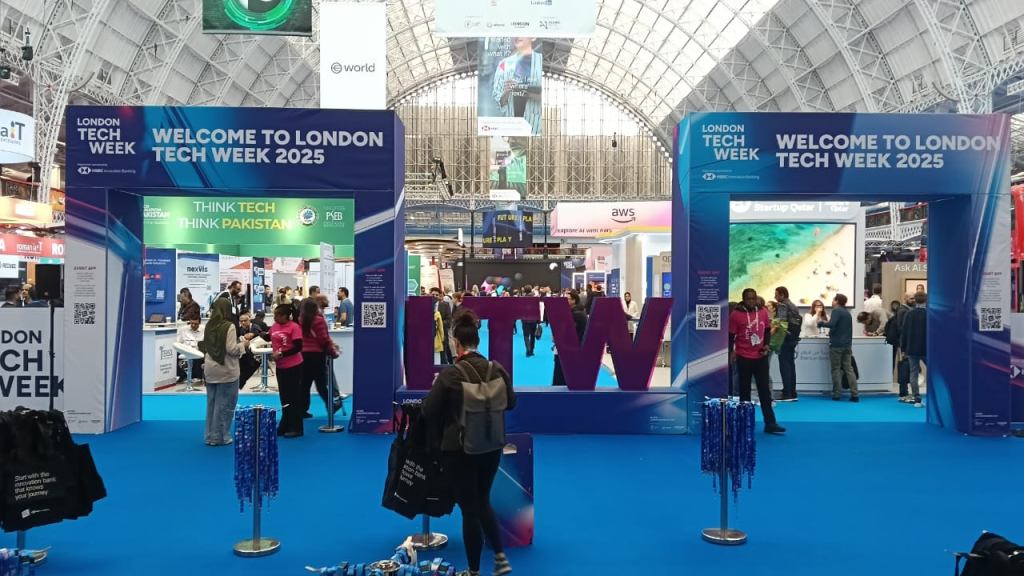
The B2B Tech Events Recap: March till June 2025   Here is a recap of what Enterprise IT News, our sister publication as well as the publication arm of Acumen Intelligence, has been up to since March 2025 right up to this June. (Image caption: The entrance to London Tech Week’s venue at Olympia, Kensington). In early June, London was abuzz with highly anticipated technology events that saw B2B tech professionals and decision makers from all over the globe, converging at. To add another layer of meaningful activity was Enterprise IT News – Acumen Intelligence’s publication arm – that was also on-site at London Tech Week and The AI Summit Series to observe, interview, gather strategic knowledge and report! 2025 started off in a big way for Enterprise IT News with Tokyo IT Spring Week in March, and then Las Vegas in May, when Enterprise IT News attended Dell Technologies World 2025.  We reported about companies that are in the business of pure intelligence, how AI will follow the data , and even how Dell as Customer Zero had transitioned their AI Factory portfolio to platform status. Data volume and data foundation are significant, and this was evident in Prague when Zscaler execs like Jay Chaudhry and Phil Tee talked about the data asset Zscaler owns which is crucial to enabling their vision of Agentic-powered SecOps. But before that, in London, EITN zoomed into topics which were on everyone’s lips: artificial intelligence, quantum computing, and what NVIDIA’s Jensen Huang said about the UK’s supercomputing capabilities. (Stay tuned for an upcoming EITN chat with Dell’s professional services VP who shared about Dell’s collaboration with the UK on Project Dawn). Other significant themes that emerged throughout The AI Summit conference was the strategic deployment of AI to drive business value, rather than merely focusing on technological advancements. Aligning AI initiatives with clear business objectives, ensures that AI solutions are not just novel but also address specific problems and deliver tangible outcomes. This strategic approach underscores the necessity of integrating AI into business processes thoughtfully and effectively, highlighting the shift from experimental pilots to impactful production use cases. Besides these, other recurring themes at throughout all of these events include: The importance of data management and governance in the successful implementation of AI – there is a need for robust data architecture and governance frameworks to ensure systems operate securely and ethically. The role of AI in enhancing human capabilities and driving productivity – the integration of AI agents capable of reasoning, planning and executing tasks autonomously is an opportunity to streamline workflow and optimise resource use. Human oversight and collaboration in AI processes is stressed to ensure accountability and trust especially in high-risk areas like healthcare and finance. Collaboration and strategic partnerships were highlighted as crucial for scaling AI effectively.  Building trusted partnerships with technology vendors, consulting firms, and industry stakeholders, for example. A collaborative approach leverages diverse perspectives and resources, driving successful integration and innovation. Mission accomplished: Setting the stage for exponential growth For Enterprise IT News , the mission of listening to global tech brands, gaining insights, and sharing their stories extend far beyond the months of March to June, or even cities like Tokyo, Las Vegas, London, and Prague. Many more such similar events are upcoming and we look forward to attending these happening at all corners of the globe, to report about the latest and greatest in cutting edge technology, best practices, trends, and thought leadership. If you have an event you’d like to highlight, drop us a DM, so we can get it on the radars of Acumen Intelligence, all our online and news properties, our readers, and our entire database. See you on the other side.

Cybersecurity

From firewalls to fabric at Zenith Live25: Zscaler’s journey to agentic SecOps

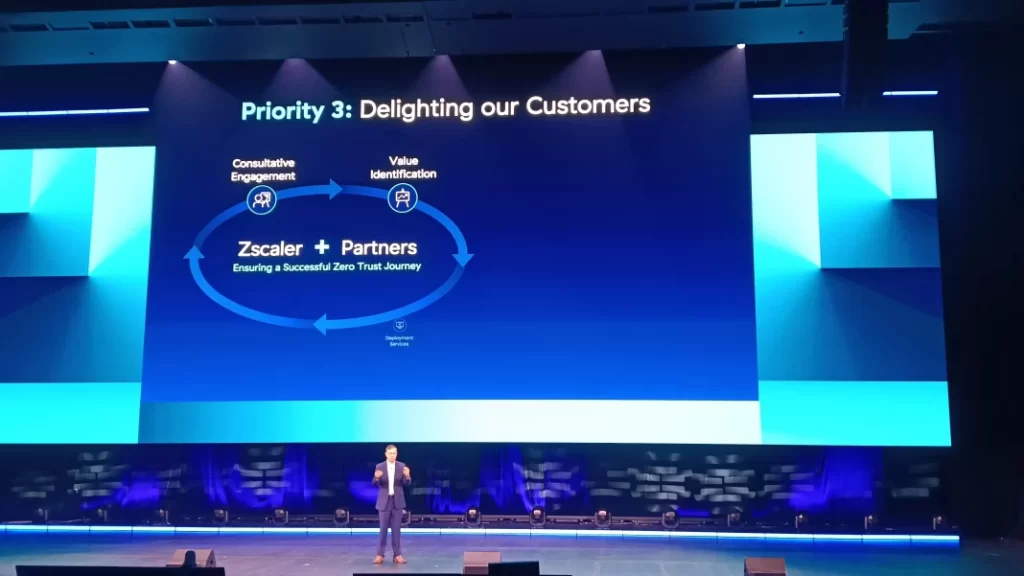
From firewalls to fabric at Zenith Live25: Zscaler’s journey to agentic SecOps Zscaler makes zero trust achievable and implementable at scale in a way that’s difficult with the network-based policy constructs of firewalls and VPNs. We find out how at the recently concluded Zenith Live 25 in Prague. During Zenith Live 25 in Prague, Enterprise IT News sat down with Adam Geller, Chief Product Officer at Zscaler, to discuss the company’s evolving product strategy, the impact of recent acquisitions, and how artificial intelligence is reshaping the cybersecurity landscape.  He provided a clear and comprehensive overview of where Zscaler used to be and the very exciting future it is headed towards, as the organisation continues to secure their customers’ environments and data.  Network constructs versus the business policy construct The main thing that makes Zscaler stand apart from other companies that offer Zero Trust capability is how they approach networking. “I think many companies subscribe to zero trust as an approach and so the principles are similar. Adam Geller “It’s a question of how well you can do it, and how you define it,” said Adam.  For example, a solution may be connecting the right business users to the right business applications, but they could be defining it via IP addresses or other network constructs. “So, you wind up being overly permissive in what you connect together,” Adam pointed out. He explained that, the organisation’s unique differentiator lies in its ability to enforce business policy at a granular level – connecting the right users to the right applications, regardless of network and location because it is able to move beyond network constructs like IP addresses and instead leverage identity and context to minimise unnecessary permissions and reduce risk. Crystallising the Zscaler mission to the market Adam had joined the company nine months ago, excited about the company’s mission of enabling any-to-any communication via business policies and leveraging networks only as transport. “So I’ve spent a fair amount of time with Jay Chaudhry, our founder and CEO, talking to him before I joined about what his vision was for the company and where he thought it could evolve to.” According to Adam, the zero trust concept means not ever trusting anything to connect to anything else until validation is done. “And the way you validate is you have to understand the identity of who or what that is asking to communicate or connect.” We recognise that we are more and more mission-critical for our customers. So we have and will continue to make substantial investments in all of our capabilities around zero trust everywhere, including expanding our footprint for global coverage. Adam Geller Earlier in his career, this CPO confessed he had found satisfaction in installing firewalls and working with network infrastructure.   Those days are long gone, and currently he emphasises that Zscaler makes zero trust achievable and implementable at scale in a way that’s difficult with the network-based policy constructs of firewalls and VPNs. This is due to the solution’s ability to secure and simplify network access without relying on complex network-based policies, effectively replacing the need for complex firewall configurations. “We recognise that we are more and more mission-critical for our customers. So we have and will continue to make substantial investments in all of our capabilities around zero trust everywhere, including expanding our footprint for global coverage.” Synergistic acquisitions According to Zscaler CEO Jay Chaudhry, the company processes over 500 billion transactions daily, a figure which is 50 times what Google Search processes every day. This translates to 500 trillion security signals across Zscaler’s global security cloud, which is derived from analysing hundreds of billions of transactions and requests. Calling this wealth of information a data asset, Jay also shared about customers who have asked Zscaler to do more with logs and the telemetry data which it collects.  Recognising the potential this data asset has in enabling better security operations or SecOps, the company had acquired Avalor and Red Canary with the objective of accelerating its vision of an agentic-based security operations centre (SOC). Agentic security operations Avalor’s capability entails building a data fabric that serves multiple applications, and it does this by taking transaction level info and telemetry, synthesising and deduplicating data, adding context, and creating entity relationships. Now, this foundational data intelligence layer is anticipated to power up Red Canary’s automation and investigation capabilities as an MDR (managed detection and response) solution, and ultimately enable different agent-based security operations like data collection, investigation, policy enforcement, and so on. There is potential to significantly reduce task execution from 40 minutes all the way down to 3 minutes. Jay explained, “We aren’t becoming an MDR company. We are fundamentally a technology company. This acquisition allows us to get to the market with a more comprehensive solution.  “Again, we will work with all the partners to make this technology available for you.”

AI, Events

From maker to billions: How London became quantum computing’s and AI’s defining moment

  The next generation of AI, thanks to quantum technology, is going to be far more impactful, reliable, accountable and valuable to every single one of us, according to a quantum computing expert. London Tech Week and its headliner event, The AI Summit London, was chock full of innovative sights and sounds and to this journalist, it was the ones around AI and quantum computing that really stole the show. Attending a technology conference and exhibition touted to be the most prominent in the United Kingdom, was a treat, even more so because of the iconic, historical and yet modern locations each were held at. Here are the technologies and trends which Enterprise IT News zoomed into during these two events: Quantum on the rise Ilyas Khan, the co-founder of quantum unicorn, Quantinuum, wanted to emphasise the emerging importance of quantum computing and its potential to revolutionise various fields.  Ilyas described, “A very small number of people would have given any attention to it, and of course, here we are in the middle of 2025 and it’s on the verge of becoming what I consider to be an everyday topic, both in terms of government policy, in terms of the financial markets, but most important in terms of your day-to-day lives. “ The burning question remains, “What is it that quantum computing is going to do that is making it so interesting for such a wide variety of people all over the world?” Ilyas also thought that the industry is, if not a few years away then a year or two away from the conversation about AI incorporating quantum. “There is not a country anywhere that does not have a quantum programme, a set of initiatives that in many instances stretch back many, many years.”  Ilyas also opined that the hype cycle for quantum computing hasn’t even started yet, and suggests that more investments are likely to come in the near future. Hardware, compute power, and tipping point When we talk about AI, we are talking about our ability to utilise underlying hardware. So, if the GPU revolution hadn’t happened, we wouldn’t be talking about ChatGPT or Anthropic or Cohere, today. This aligns with what quantum hardware like super computers are anticipated to enable and the next generation of AI thanks to quantum technology, is going to be far more impactful, reliable, accountable and valuable to every single one of us, Ilyas believed.  Could the quantum tipping point have happened this year?  Ilyas thinks so with the commitment of large organisations and countries to large deals. One notable example is Quantinuum’s foray into Qatar, via a joint venture with Al Rabban Capital, a USD1 billion joint venture deal which may be the largest single quantum computing deal, to date. According to a United States White House fact sheet, the Quantinuum – Al Rabban venture is aimed at building next-gen quantum capabilities inside the US, as well as training and workforce development. A later agreement with Invest Qatar, sees the investment promotion agency of Qatar supporting Quantinuum’s recently announced expansion into the region. Ilyas spent the rest of his presentation diving into how quantum computers can solve complex problems that classical computers would balk at, as well as potential quantum applications in personalised medicine, drug discovery, and understanding biological processes. Oxford Ionics, a British quantum computing unicorn company that was recently acquired, highlighted the UK’s leadership in quantum computing and suggested that there is a growing trend of investment in quantum technologies.  “In my considered opinion, the hype cycle hasn’t even started. If we think we are excited about AI, quantum computing takes it to a different level, Ilyas said. SaaS Stifling Innovation – the buy or build conundrum The tug-of-war between buying or building applications is as old as time. It was a panel topic with panellists from CIBC Europe, a major North American financial institution with global presence, and Evri, one of the UK’s largest parcel delivery companies. Both reps from CIBC and Evri confessed to moderator Nikki Dean that SaaS is not stifling innovation.  CIBC’s Sean Duffy explained that an organisation which tries to innovate internally, can find the experience “really difficult because the large organisations tend to strangle it and exert too much process and control over it.” “My gut feel is it’s better to push it further out, which comes with its own problems too because of the lack of (vested interest).” He recommended organisations to put the right controls in place before pushing it further ‘out’.  “I’ve seen that work better and that’s mainly from the experience of being in large banks and large insurance companies.” Meanwhile, Evri’s Marcus Hunter shared that his top priority is to ensure “things are scalable, app-based, and available. So, that’s where the buying comes in because software-as-a-service has the foundation to provide that. That’s where I will lean on SaaS for innovation.” That said, the option to build can arise when there is intellectual property to maintain as well as sensitive data involved. Innovating internally is “really difficult because the large organisations tend to strangle it and exert too much process and control over it.” – Sean Duffy The panel discussion arrived at the overall conclusion that SaaS is a powerful tool for innovation when strategically implemented, with careful consideration of organisational needs and constraints. The UK wants to be an AI Maker NVIDIA CEO Jensen Huang’s comments continued to reverberate throughout The AI Summit event for over 48 hours after he made them during London Tech Week. This is the kind of impact that hardware like GPUs will have on AI development.  At the Headliners Stage, Feryal Clark, the Undersecretary of State for AI and Digital Government had a good chat with Reuters’ Editor-in-Chief Axel Threlfall, to unpack AI announcements by Chancellor Rachel Reeves as well as Jensen’s comment that, “UK has a great AI ecosystem, but it lacks supercomputing power.” Feryal pointed out that the UK is the third largest market for AI in the world and that the raft

Cybersecurity

Zscaler launches new solutions to strengthen and extend Zero Trust

Zscaler launches new solutions to strengthen and extend Zero Trust Advanced security solutions extend Zero Trust everywhere to protect data across branches, multi-cloud environments, and remote environments Zscaler, Inc., the leader in cloud security, announced a new suite of solutions that enable customers to quickly adopt Zero Trust Everywhere. These innovations extend the reach of true Zero Trust and enable businesses to modernize and scale securely by providing end-to-end segmentation between and inside branches and enhance security across multi-cloud environments. Organizations are increasingly distributed, rapidly adopting IoT, OT, and multi-cloud architectures and grappling with increasing digital complexity. Zscaler has unveiled innovative updates to the Zscaler Zero Trust Exchange™ platform, empowering businesses to extend Zero Trust Everywhere—across users, applications, devices, clouds, and branch locations. These enhancements make an organization’s branches and clouds invisible to bad actors, and eliminate the lateral movement of threats like ransomware within the organization’s network. With its expanded capabilities to strengthen Zero Trust Everywhere, Zscaler is advancing its cybersecurity postures, simplifying security network infrastructure, and making it easier for businesses to scale securely in today’s rapidly changing threat landscape. The following Zero Trust solutions—highlighted at Zenith Live 2025—are now generally available or accessible for select use cases by Zscaler customers. ● Unified Appliance for Zero Trust Branch: Zscaler’s Zero Trust Branch redefines enterprise security and networking with a unified appliance that secures communications between branches, campuses, and factories, and segments OT and IoT devices within them including legacy OT, with no downtime. The solution also provides newly introduced disposable jumpboxes that enables contractors secure, time-bound access to critical systems. By eliminating the need for firewalls, legacy NAC, cumbersome VLAN configurations and VDI for remote access, organizations can stop lateral threat movement with unparalleled efficacy. This approach not only elevates security, but also dramatically reduces complexity and costs, empowering businesses to modernize and scale faster without compromise. Unified Appliance for Zero Trust Branch is generally available. ● Zero Trust Gateway for Cloud Workloads: This cloud-native service on AWS enables organizations to secure communications from workload to the internet, and East-West traffic between workloads and VPCs/VNETs, in under 10 minutes without deploying agents or VMs with a Zscaler managed offering. This strengthens security in hybrid and multi-cloud environments, allowing organizations to reduce the attack surface associated with firewalls, and eliminate complexity and secure workload communications. Zero Trust Gateway is generally available. ● Zscaler Microsegmentation for Cloud Workloads: Zscaler further extends AI-driven segmentation to cloud workloads with newly introduced host-based Microsegmentation service that provides granular host and process level segmentation policies using its AI-powered Segmentation engine for Workloads in public clouds such as AWS and Azure as well as on-premise Data Center based workloads that run on bare metal. Zscaler Workload agent provides process and workload level metrics, traffic flows as well device context, that protects crown jewels against lateral threats and compromise. Zscaler Microsegmentation is generally available. ● Zero Trust Exchange for B2B: The introduction of B2B Exchange revolutionizes secure collaboration by providing a cutting-edge app-sharing platform for partner organizations, eliminating the need for outdated technologies like MPLS circuits or VPNs that come with complexity and the risk of oversharing. This solution accelerates seamless, secure connections between enterprises, empowering organizations to drive faster, more efficient mergers, acquisitions, and partnerships while safeguarding sensitive data. Zero Trust Exchange for B2B is available for select use cases, with extended capabilities coming soon. “Zscaler’s latest innovations for the Zero Trust Exchange truly extends Zero Trust Everywhere beyond users and redefines the enterprise security and networking by seamlessly unifying operations, strengthening threat defenses, and enabling secure connectivity across users, devices, applications, branches, and clouds with better visibility and experience—no matter how complex or distributed the environment,” said Dhawal Sharma, EVP Product Strategy, Zscaler. “With this expanded Zero Trust Everywhere approach, organizations can accelerate security modernization, mitigate risks, and protect data everywhere business happens. (This was adapted from a press release)

AI

3,000 customers later: The Dell AI Factory’s shift to a platform play

3,000 customers later: The Dell AI Factory’s shift from infrastructure to platform play     Something else which Dell finds resonates with customers is the work they do with AI startups at the platform layer, or the orchestration layer, as well as startups  that have AI application specific outcomes. In 2024, the Dell AI Factory was introduced as a portfolio of Dell infrastructure from storage to servers to PCs, combined with an ecosystem of partners. In 2025, this tune has a slight change. The rubber has met the road, been running on it for the past 12 months, and according to Dell’s Chief Operating Officer Jeff Clarke, over 3,000 businesses have built AI Factories with Dell, adding over 200 new features to it in the process. Besides this stable of AI Factory customers, the learnings that Dell itself gained the past 12 months is significant. For one, Dell discovered it had over 900 so-called AI projects across their company, with little coordination, strategy, or governance. Efforts were fragmented, inefficiencies were numerous and entrenched. This necessitated Dell having to do a few things like establish governance for AI and data, as well as appoint a Chief AI Officer to drive strategy and accountability. The most critical realisation was that Generative AI is all about data, and Dell found itself having to clean, unify and connect data that was scattered across the organisation, into an enterprise-wide “data mesh.” This focused and structured approach, had optimised Dell’s existing hardware and resources for solutions and they rolled out a GenAI-powered service assistant that achieved ROI in less than three months. This experience, perhaps served as the foundation for the Dell AI Factory framework. Deploying Enterprise AI with an AI Factory framework “When a company buys a solution, the framework ensures that it is validated through this framework which in turn offers compatibility, repeatability, and support created with our professional services arm,” a chat with Dell Technologies’ VP of Edge Technology, AIOps and Multi-System Management, Pierluca Chiodelli, had revealed. An interview with another exect, this time Dell’s CTO of Technology Innovation and Research, Satish Iyer also added perspective and a large piece to the puzzle picture. “It’s a platform where smaller solutions can integrate and create offerings.”    But, there is another independent motion that his organisation executes as well.  Co-innovation with customers Besides working a lot with startups and ecosystems that focus on pure tech tracks like AI, Satish and his team also co-innovate with customers. “So, we work with customers on special projects to innovate and see what we can solve with them.” And this is driven via applied research which the CTO’s office is already working on, or there is a particularly knotty customer problem to unravel and Satish described that when co-innovation happens, “A lot of times it’s goodwill, because we don’t charge. We will innovate with you. We take research team members and try a few different things to see what works.” With 12 to 15 of such projects active at any one time, Satish pointed out that these are not neverending projects. As for a specific outcome that both parties would agree on, he shared that it depends on the project, the sensitivity of data involved, and regulations of the country their customers are based at. “From when the concept starts, we give (the project a duration of) 10 to 12 weeks to get there.” Startups and the platform play Dell is also taking on offerings from startups like Glean and Cohere, as customer zero. He explained, “A lot of our customers are asking us, ‘What is your experience? What have you done here?’ So, it helps when we try it ourselves, and it’s not a criteria but it’s something which we happen to do quite a bit.” Where it makes strategic sense, Satish shared they would invest in performing companies which Dell would partner with to go to customers. Something else which Dell finds resonates with customers is the work they do with AI startups at the platform layer, or the orchestration layer, as well as startups  that have AI application specific outcomes. “Most of (their solutions) we use internally, and we go to talk to customers about it.” “If there is an opportunity for us to co-innovate with a customer and use a startup technology to do it, we will. But we have to be selective. At the end of the day, the goal is to solve customer problems in the most effective way. If I can do that with Dell IP and research, I will.” The pluggable platform Satish referred to how far Dell has come since a year ago. “This is the fundamental difference, things are changing, right? “When talking to vertical customers about their problems, you understand that they need technology and the software stack above the infrastructure stack right? We are not an application company, so we have to partner with (the ecosystem).” What Dell is creating is also reminiscent of another large technology brand building an open, modular and interoperable platform that enables enterprises to rapidly adopt, scale, and integrate advanced digital and AI capabilities. This is within the realm of possibility for Dell because of its technical leadership and the trust they have built with customers and partners over the years. Satish concluded, “It is the only way we can be in front of this whole AI bandwagon, because things go so fast and the advancements in technology especially in the startup space is so incredible. “We gotta keep up.”  

Photo by Google DeepMind: https://www.pexels.com/photo/an-artist-s-illustration-of-artificial-intelligence-ai-this-image-depicts-ai-safety-research-to-prevent-the-misuse-and-encourage-beneficial-uses-it-was-created-by-artist-khyati-trehan-17485632/
AI

Ant International pushes AI strategy with AI platform for fintechs

Ant International pushes AI strategy with AI platform for fintechs Three-Pronged AI strategy: security, vertical fintech expertise, and platform-level support for agentic FinAI. Ant International, a leading global digital payment, and financial technology provider, today unveils its AI strategy with the launch of Alipay+ GenAI Cockpit, an AI-as-a-Service (AIaaS) platform that empowers fintech companies and super apps to build AI-agentic and ultimately AI-native financial services with enhanced efficiency, security, and flexibility. Making AI systemically work for finance remains the holy grail of the current AI revolution. Alipay+ GenAI Cockpit is a platform to help entrepreneurs architect an agentic and ultimately AI-native financial services, combining automated workflows and task orchestration with a dynamic enterprise context, across main fintech tasks, from payment orchestration, customer onboarding, compliance checks, to fraud detection, dispute resolution, as well as evaluation and performance optimization. “The future of finance will be shaped by agentic AI that not only carry out tasks autonomously in real automated workflows and sophisticated financial business and compliance context with reliability, but also interact, evolve and learn rapidly in orchestration with ever-growing precision,” said Jiangming Yang, Chief Innovation Officer of Ant International. Alipay+ GenAI Cockpit has been honed on Ant International’s four key business units: wallet gateway service (Alipay+), merchant payment service (Antom), cross-border business account service (WorldFirst), and embedded finance service (global treasury management, digital lending and credit tech solutions). Upon successful completion of trial runs, the first external clients in Southeast Asia and South Asia will start officially deploying the Cockpit in June 2025. Combining a fintech-specific toolbox and dynamic industry knowledge base alongside business-ready AI innovations, the Cockpit embodies three key directions of Ant International’s AI strategy. Security Shield for Trusted AI AI scamming threats using deepfake and other technologies have been growing over 10 folds by the year, with grave implications especially in the financial sector. Statistics show 22% of businesses have encountered AI-generated payment fraud. Ant International invests heavily in AI security solutions to combat external AI scamming attacks and eliminate internal model security risks such as model hallucination or bias. Its AI SHIELD framework manages risks across system architecture designing, data processing, model training, and inferencing. It offers real-time dynamic risk assessment, including detecting adversarial prompts and sensitive data leakage through over 100 recognition models and 600,000 risk lexicons. Today, fraud loss rate in Ant International’s merchant payment service is 5% of industry average.  Deep Vertical Financial Expertise Alipay+ GenAI Cockpit leverages over 20 leading LLMs, including Ant International’s own Falcon Time-Series-Transformer FX Model. However, it has focused on integrating fintech knowledge bases, such as bank transfer rules and dispute resolution policies, to help businesses build specialized fintech agents. The Cockpit toolbox supports retrieval-augmented generation (RAG), post-training, evaluation, and benchmarking, taking the combination of general-purpose datasets with industry-specific benchmarks developed from Ant International’s financial expertise to help improve model precision.  Built on the Cockpit, Antom Copilot is the world’s first AI agent designed to help merchants boost conversion by streamlining the process of payment method integration, recommending optimal payment channels, and resolving common tasks like code correction and the auto-completion of merchant onboarding documents. It also allows merchants to configure risk management strategy with natural language. Full-Stack FinAI Platform Support Cockpit offers a wide selection of pre-built agents covering regular tasks including customer service, content curation for targeted marketing, and AI-assisted coding. One level up, a business can easily customize agents for more specialized scenarios such as travel advisory, tax refunds, cross-border remittance, and loyalty rewards, accelerating time-to-value across business functions. Further, the Cockpit’s model context protocol (MCP) marketplace supports major MCP servers developed thus far and allows businesses to create their own MCP servers to enable autonomous task completion. It also supports flexible deployment across public clouds and on-premise environments, drawing on strategic partnerships with Google Cloud and other top-tier infrastructure providers. “The FinAI sector is at its big-bang moment,” said Yang. “We are eager to work with the industry to evolve and expand the toolbox as well as this ecosystem to help financial businesses scale their growth faster and better.” About Ant International With headquarters in Singapore and main operations across Asia, Europe, the Middle East and Latin America, Ant International is a leading global digital payment, digitisation and financial technology provider. Through collaboration across the private and public sectors, our unified techfin platform supports financial institutions and merchants of all sizes to achieve inclusive growth through a comprehensive range of cutting-edge digital payment and financial services solutions. To learn more, please visit https://www.ant-intl.com/.  (Adapted from press release)

Scroll to Top