

A Dell Technologies customer panel reveals enterprise AI value being realised after three years of experimentation, DIYs with makeshift tools, and massive ideation.
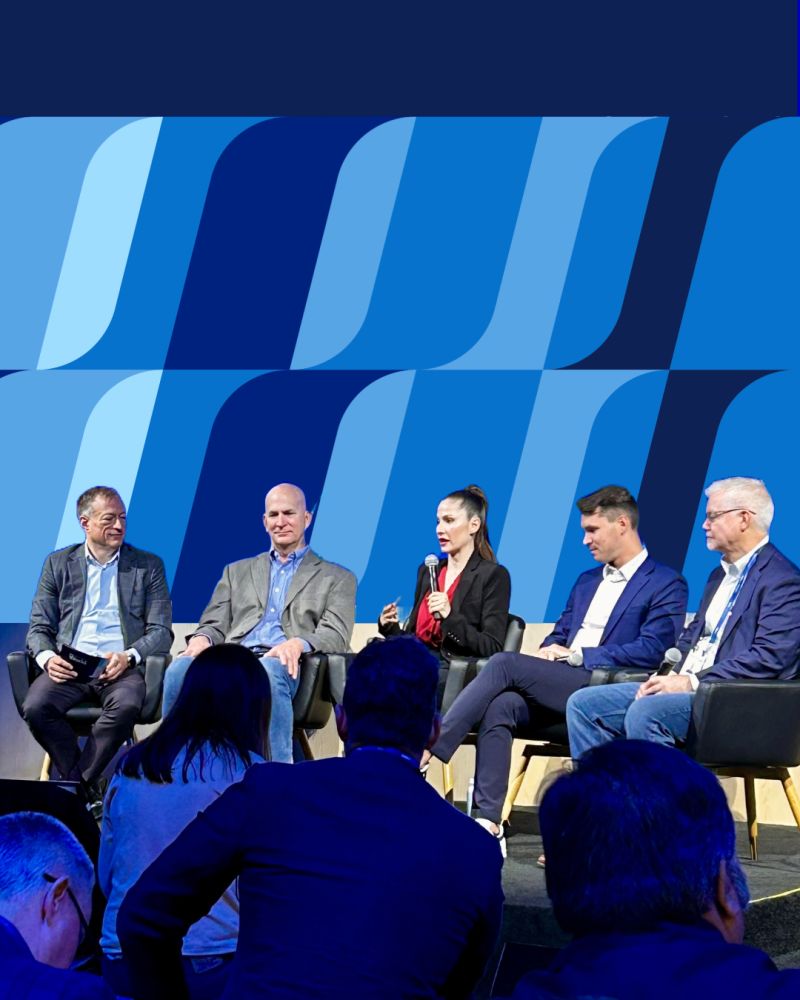
Dell Tech World 2025 unfolded in a way that many would appreciate, thanks to the diverse examples by customers aka businesses about how they approach AI and operationalise it in workplaces. A panel session moderated by Dell Technologies’ CTO and Chief AI Officer, John Roese, also unpacked these examples.
John, alongside AI and IT leaders from CSX Corporation, Dauntless XR, Fluidstack and Worley, talked about their experiences deploying AI at scale in diverse industries like rail transportation, mixed reality tech for aerospace and aviation to AI cloud platform service provision to engineering plus construction.
The common thread among all the panellists’ businesses was how each was on an AI journey regardless of how wide or narrow the scope of their AI implementation. John opined that this was a very good hint that, “…we’re starting to see scale.”
Starting with experimentation: 3 years later
The panellists’ insights highlighted how experimentation figured largely in their very early efforts. Year 1 was mostly about experiments and proposed projects, while Year 2 saw many do-it-yourself projects with initial implementations that had “interesting outcomes.”
John shared his frank comment, “To be perfectly honest, Year 1 was kind of a waste of time. We had a couple of tools available that were not enterprise-grade, but what they did was spawn massive ideation.”
Year 3, or this year, saw industry announcements from the likes of Cohere and Glean as it coalesced in ways that made generative AI tech easier to consume.
The panel discussion served as a gathering of people who have walked the journey and achieved outcomes in ways that signal to other enterprises, It Can Be Done.
Enterprise AI today?
Enterprise AI is the application of AI against an organisation’s most impactful processes to improve productivity.
“At Dell, we probably have a million processes in the company, and the first ones we went after were four and within them, maybe 20 processes. The result was a significant impact on the company,” John explained.
AI came into action for CSX when the rail operator focused its initiatives on safety and employee engagement. CSX’s senior director of innovation, Bill Jacobs admitted that AI is not new to the organisation and that it has been working on what he likes to call classical AI, for 12 years, specifically on machine vision to monitor and inspect train tracks or prevent equipment-caused injuries.
To be perfectly honest, Year 1 was kind of a waste of time. We had a couple of tools available that were not enterprise-grade, but what they did was spawn massive ideation.
John Roese
“What we have seen the last year is that generative AI is fundamentally changing how we approach those problems.”
In the past, a particular problem would have taken a few months and at least two engineers to solve. Now, it can be 80% resolved in 20 minutes.
Care about where your AI-trained models come from
As an AI cloud platform provider, Fluidstack played a crucial role in powering some of the largest AI research labs and supporting large-scale AI projects for sovereigns and enterprises. Product VP, Mike McDonald shared, “Our goal is to enable customers to get access to reliable price performance infrastructure at scale.”
The company leveraged AI to optimise the design and management of massive GPU clusters, and explored the use of agentic site reliability engineers (SREs) to augment human staff in maintaining infrastructure.
Mike observed, “Large-scale deployment trend continues, right? And we are starting to see a massive shift towards inferences – the larger clusters are getting larger although there are fewer of them. As we start enabling everyone who is doing computer vision at scale, or moving your AI to the edge, there are massive data centres powering it.”
To this John quipped that, “The hybrid multi cloud environment for AI is different from the hybrid multi cloud environment for traditional workloads.” This has led to the emergence of a whole new class of infrastructure players like FluidStack, “…that are actually initially going after the large training environments.”
We need to apply generative AI across all of the knowledge we have, to supercharge our engineers, so 50,000 can do the work of 100,000.
Peter Downey
Worley, the global engineering and construction firm used AI to transition from a document-centric to a data-centric business. By embedding generative AI into processes such as bid evaluation and technical specification, Worley aimed to double workforce productivity and address the global shortage of skilled engineers.
The company highlighted the need to balance cloud and on-premises infrastructure, both to manage costs and to protect intellectual property. Worley VP, Peter Downey, also said, “We need to apply generative AI across all of the knowledge we have, to supercharge our engineers, so 50,000 can do the work of 100,000.”
Generative AI = more than just LLMs
Dauntless XR CEO, Lori-Lee Elliot, explained how her company uses generative AI to not only speed up development, but also incorporate it into their products. One of these is a mixed-reality, hands-free guided workflow app that integrates with headsets or smart glasses for field workers in construction and heavy industries.
Eventually people that are smarter than us and with more PhDs can create models to run different simulations and scenarios for things like space weather and air traffic control and so on.
Lori-Lee Elliot
The key capability that brings it all together is real-time object recognition which segments out an image and identifies objects within it. Yet another product that Dauntless XR has is immersive digital twins of very large spaces, for example the inner solar system that it worked on with NASA to be able to provide a snapshot view of satellites in space.
“Where we see this going is us being able to provide a single platform where all the data lives. Eventually people that are smarter than us and with more PhDs can create models to run different simulations and scenarios for things like space weather and air traffic control and so on,” Lori-Lee explained.
What Dauntless XR has done is an example of hybrid AI which John described as an approach combining different AI technologies and architectures like computer vision, reinforcement learning, machine learning and so on, rather than relying solely on large language models (LLMs). These technologies are combined to process and interpret data before generating outcomes and solutions.
“Half of the projects at Dell that were put into production were hybrid AI,” said John.
Final outcome: Provocative
John also made another provocative statement about future user experiences: “After you change how work is done, what is the user experience? Should you use the same user interface for a thing that now does the work for you? Or do you make it invisible?”
Lori-Lee had also suggested that extended reality (XR) has potential to be a primary AI interaction interface. Imagine moving beyond current chat-based interactions, where AI is embedded into processes, and there are more immersive, context-aware experiences.
AI can radically reshape how we interact with technology and information. The session also underscored that enterprise AI had moved beyond hype, delivering real-world outcomes while transforming how businesses operate, compete, and grow.