

From Joule helping to moderate the keynote to an AI agent being created live on stage, SAP’s Tokyo showcase demonstrated that enterprise AI is no longer an idea waiting on the horizon. It is already becoming part of how businesses operate.
There was something both surreal and remarkable about watching an artificial intelligence help facilitate a major enterprise technology keynote.
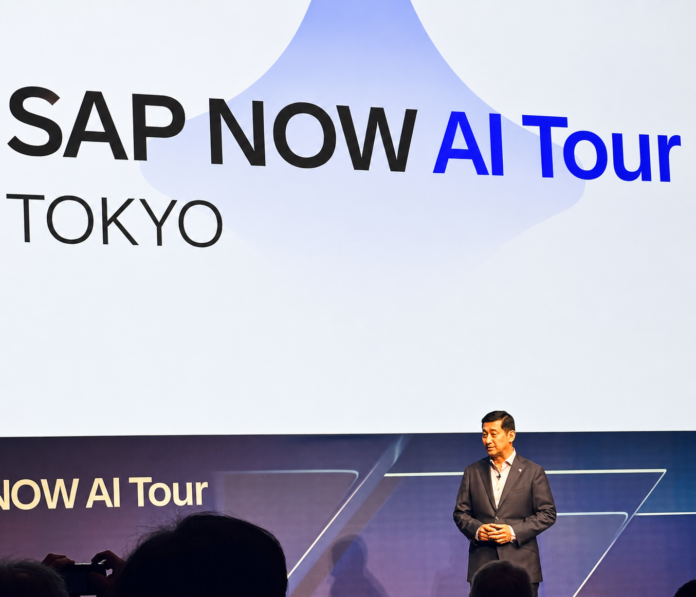
At SAP NOW AI Tour Tokyo, held on 29 July at the Grand Prince Hotel Shin Takanawa, SAP’s AI assistant Joule was not simply being discussed as a future product. It was actively participating in the event, helping guide the conversation alongside SAP Japan President Yoshiro Horikawa, NEC President Akira Kono and other speakers.
It immediately established the keynote’s central message: AI is no longer the future. It is the present.
“The SAP AI Agent Hub was presented as a central environment for managing agents across SAP and external ecosystems, including AWS, Databricks and Microsoft.”
At the centre of the keynote was SAP’s vision for the Autonomous Enterprise – an organisation in which connected data, intelligent systems and AI agents work across business functions to improve how decisions are made and processes are executed.
Japanese companies already possess strong operational capabilities on the ground. However, as business environments become more complex, connecting data, systems and workflows end-to-end is increasingly essential. SAP’s proposition is that enterprise AI can help bridge these gaps, enabling organisations to operate with greater speed, visibility and coordination.
The autonomous enterprise presented by SAP is not a business operating without people – rather employees and AI work together more effectively. People define objectives, exercise judgement and maintain accountability, while AI agents support decisions, coordinate activities and execute approved tasks.
Building the foundations for autonomy
As one speaker put it: “Agents will become our colleagues, our teammates.” and watching Joule participate in the keynote made that statement feel much closer to reality.
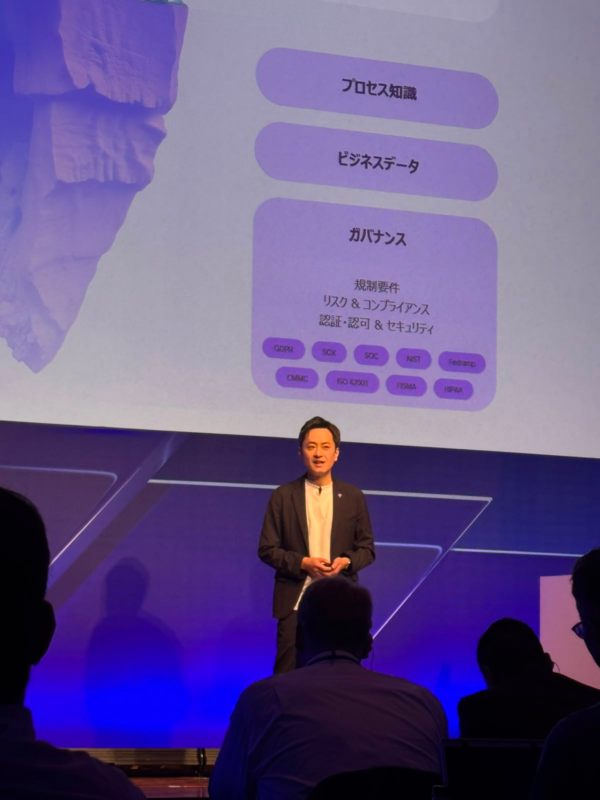
Honna Susumu, Japan AI Lead, discussed how the SAP Knowledge Graph gives AI the business context it needs to respond effectively. By understanding the relationships between data, processes and business entities, AI can provide answers grounded in how an organisation actually operates.
Governance is equally important. The SAP AI Agent Hub was presented as a central environment for managing agents across SAP and external ecosystems, including AWS, Databricks and Microsoft. It allows organisations to verify agent activity, assess risks and monitor agent health and performance.
These capabilities are critical to SAP’s autonomous-enterprise vision. As AI agents take on more operational responsibilities, businesses need to understand what those agents are doing, which systems they can access and whether their actions remain within established controls.
A role-centric enterprise
The SAP Autonomous Suite was presented as role-centric, resource-aware, scalable, open and audit-enabled. Rather than requiring employees to move between disconnected applications, the aim is to organise technology around the responsibilities and outcomes associated with each role.
This includes allocating people and digital resources for optimal collaboration while ensuring that AI-driven actions remain traceable and verifiable.
A live demonstration of Joule Studio provided a practical glimpse of how this could work. In only a few minutes, an application, integrated workflow and AI agent were created – showing how organisations may rapidly translate business requirements into functioning processes.
Technology events often promise a glimpse of the future. SAP NOW AI Tour Tokyo felt different because much of that future was already operating on stage.
With connected data, governed AI agents and human oversight, SAP is positioning it as the next stage of enterprise transformation – and one that has already begun.